One Ferry from Gothenburg to Styrsö
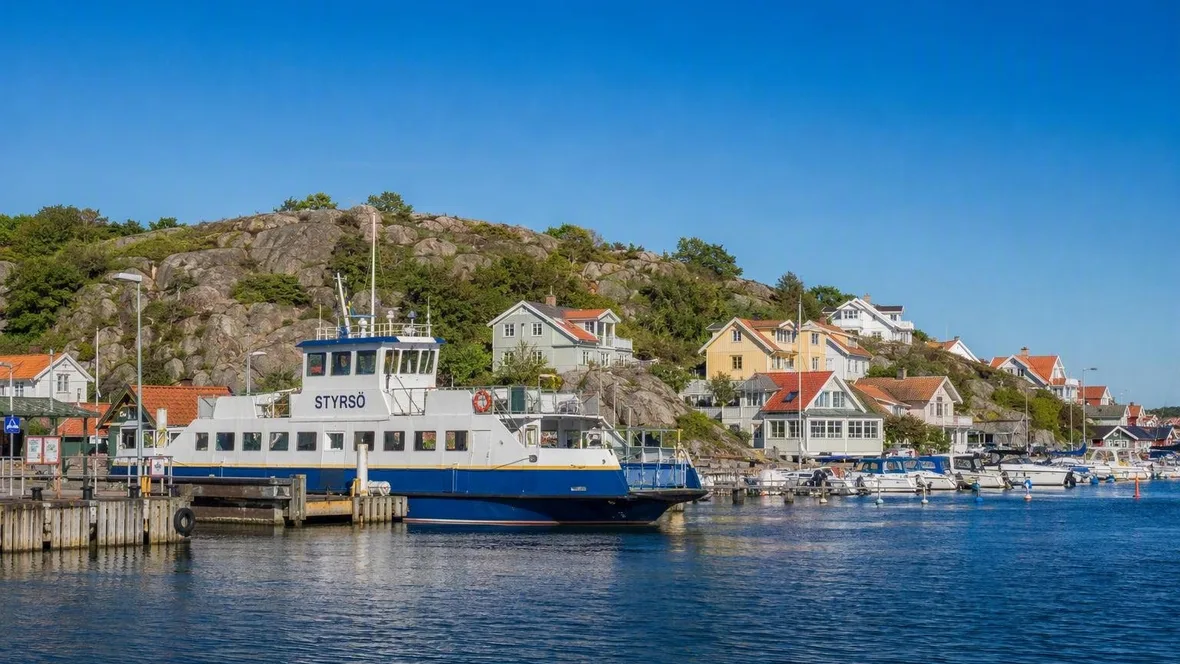
At Saltholmen, Göteborg’s land transport stops at the water. One public ferry carries passengers from that useful, unsentimental edge to Styrsö Bratten, where wooden houses, granite slopes and narrow car-free lanes take over.
Saltholmen sits at Lasse Dahlquists Plats, where trams and buses bring people to the landing and leave them facing the southern archipelago. There is no grand terminal ritual. Passengers cross from pavement to ferry, crew members check or sell tickets, and bicycles join the crossing when space permits.
The place works because it does not pretend to be elsewhere. Public transport has delivered people to a quay; public transport will now take them across the water. A deckhand has tickets to deal with, a bicycle may need a place, and the boat has a timetable. That modest chain of actions makes a useful correction to the usual island fantasy, which often begins with a great deal of fluttering about windbreakers and ends with somebody photographing a cinnamon bun.
Route 281 runs from Saltholmen to Styrsö Bratten without a change of boat. The ferry may call at Köpstadsö on the way, but passengers stay aboard. That detail matters: the crossing does not cut the day into awkward fragments. It gives the distance time to show itself.
The ferry heads southwest. Göteborg’s built waterfront falls behind, and the view breaks into channels, low shores and strips of land. The southern archipelago does not offer one broad, empty sheet of sea. Islands keep entering the frame, then slipping aside as another shore appears.
That gradual change gives the ride its substance. On land, streets, tramlines and buildings tend to overlap in a busy, useful mass. From the ferry, water separates things. A shoreline has its own outline. An island occupies a particular patch of horizon. The boat passes between them at the pace of public transport, which is slower than a taxi and considerably better for noticing where Gothenburg actually ends.
No fixed description of the weather belongs honestly to this crossing. Light changes with the hour, season and cloud, while wind and water conditions change from one sailing to the next. The route itself remains constant: sheltered water lies between successive islands, and the horizon repeatedly closes into another shore rather than opening into an uninterrupted line of sea.
Köpstadsö can appear as a stop on the route before Styrsö. The ferry does not turn this into a tour or a lesson. It simply pauses where its service requires, then continues. That is one of the quiet virtues of the working boat: it has no need to manufacture drama when the geography already provides movement.
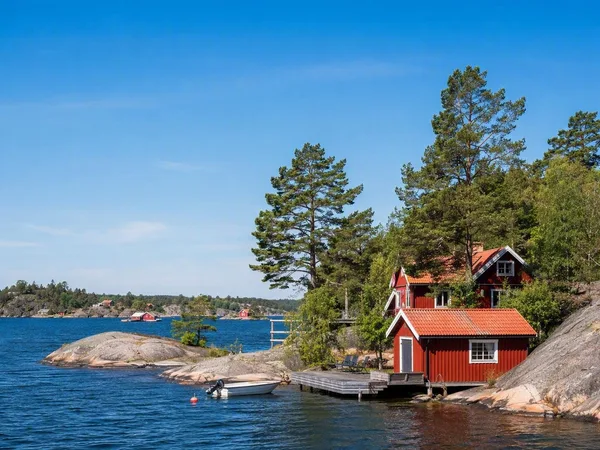
Styrsö begins to gather itself on the far side of the water. Bratten lies on the island’s northeastern shore, beside a small marina. Wooden archipelago villas and newer houses stand near the landing, while higher ground rises behind them. The island does not arrive as a single bare rock. It arrives in layers: harbour first, then houses, trees and slopes.
Wooded ground stretches between Bratten and Skäret. Farther west, the terrain becomes barer and rockier, with cliffs and exposed granite along the coast. From the boat, those forms sit behind the inhabited eastern edge. The contrast is plain enough without a narrator forcing it: small-scale domestic buildings stand at the water, while the island’s harder, higher ground holds the background.
Bratten developed as a small seaside resort in the late nineteenth century. That history remains legible in the older villas near the water, though the landing belongs to an ordinary lived-in settlement rather than a preserved stage set. Houses, paths and harbour edges stand close together. A herb garden near the café puts a compact patch of green among the buildings.
The ferry reaches Styrsö Bratten, one of the island’s three small landing places. Here the journey changes character in a few metres. At Saltholmen, trams and buses delivered passengers to the boat. At Bratten, narrow lanes and paths lead away from the water between homes, vegetation and rising rock.
Styrsö is car-free. That does not make it motionless, and it should not be mistaken for a museum display case with better views. People travel on foot and by bicycle; cargo mopeds and golf carts handle some of the daily work. But private cars do not fill the lanes, so the walking space remains visible and close at hand.
The change can be measured without turning it into a slogan. The ferry has carried its passengers through channels between islands. The landing returns everyone to solid ground. Then a path narrows between timber walls and greenery, and the harbour recedes behind the first rise of granite.
Practical details: Take route 281 from Saltholmen to Styrsö Bratten and check the current Västtrafik journey planner before travel. A Zone A adult single ticket starts from SEK 38; buy it in the Västtrafik To Go app or pay by bank card aboard, and no reservation is required for the regular ferry.
At Bratten, the first steps leave the landing for a narrow path. Wooden houses stand close by; garden green edges the way; granite rises ahead. With no line of private cars waiting beyond the quay, footsteps take the space that engines usually claim.
Keep exploring