Kakadu in Stone and Water: Ubirr, Burrungkuy and the Wetlands
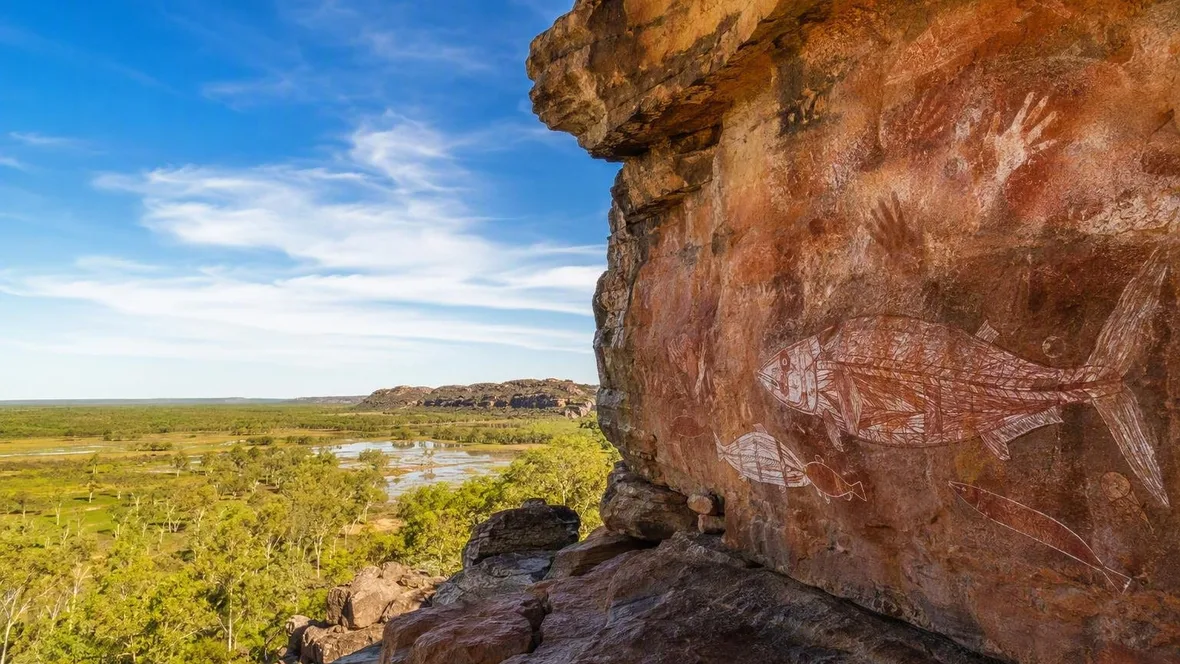
At Ubirr, painted fish show bones and organs beneath their outlines, while hand stencils and later contact art share the sandstone walls. Beyond the shelters, the Nadab floodplain stretches below the rock, placing the paintings among the waters and food grounds that inform them.
Ubirr’s painted shelters
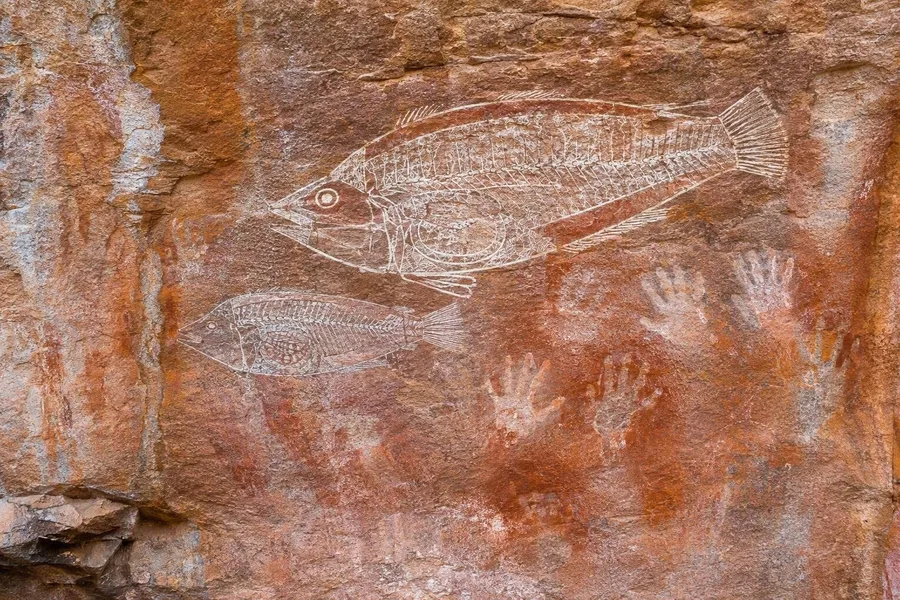 X-ray-style fish and hand stencils mark a sandstone shelter wall at Ubirr.
Ubirr holds thousands of paintings, known as kunbim, in sandstone shelters above the Nadab floodplain. Many animals appear in X-ray style, with internal parts drawn in detail. Other images include hand stencils, a thylacine and a figure thought to depict a buffalo hunter from the 1880s.
The paintings overlap because people returned to this rock at different times. They hold knowledge about food, animal behaviour, law and creation, and some motifs and places belong to people with the right to know or paint them. A painted Rainbow Serpent connects at Ubirr with creation stories, water places, seasonal change and care for Country. It does not stand for one universal Aboriginal story. Names, stories and what may be shared differ between places.
For Bininj/Mungguy, Country joins land and water with animals, language, kinship, ceremony and responsibility. The rock art belongs within those ties, rather than standing apart as an outdoor collection. Bininj/Mungguy artists continue to paint stories on bark, paper and canvas, while Traditional Owners care for the art at Ubirr.
A moderately steep climb leads from the shelters onto rock above the Nadab floodplain. In low light, the sandstone gives way to a broad, flat sweep of water-shaped country. Under suitable conditions, a chestnut-quilled rock pigeon or Wilkins’ rock-wallaby may appear among the ridges, but heat, season and time of day shape what is active.
Burrungkuy’s rock country
Burrungkuy, often called Nourlangie, names the higher rock country. Anbangbang names the lower land around it. The 1.5-kilometre walk passes the Anbangbang Gallery and a large shelter before climbing to the Kunwarddewardde lookout, above savanna and the Arnhem Land escarpment.
People used the shelter as a home for at least 6,000 years, with intermittent use reaching back about 20,000 years. Its dry walls provided cover above lower, wetter ground. The paintings include creation beings, animals and fish, as well as an image of a European sailing ship. Namarrkon, the Lightning Man, stands among them, linking the gallery to stories of storms and the wet season.
The walls also record more recent work. Nayombolmi, also known as Barramundi Charlie, repainted the gallery in 1964. His work makes a simple point: kunbim remains part of cultural identity and connection to Country, and painting can matter as much as preserving a single image unchanged.
From nearby Nawurlandja, Anbangbang Billabong lies below the sandstone, with Burrungkuy and the Arnhem Land escarpment beyond. Around the billabong, magpie geese, herons or black wallaroos may turn up in the right season and at quieter times of day.
The wetlands through six seasons
Kakadu’s wetlands do not simply switch between wet and dry. Bininj/Mungguy recognise six seasons through changes in cloud, wind, flowering plants, food and water. This seasonal knowledge guides the use and care of Country.
In Kudjewk, the monsoon season, heavy rain and thunderstorms spread shallow freshwater across the floodplains. Speargrass grows high, and magpie geese may nest in the wetlands. Floodwater can close unsealed roads and limit access to some places.
Bangkerreng brings clearing skies and falling water. Storms flatten tall grass. In the cooler Yekke season, mist can lie over low ground and waterlilies can cover shallow billabongs. Flowering trees and dry winds signal the time for Bininj/Mungguy to burn patches of woodland, leaving a visible mosaic and encouraging fresh growth.
During Wurrkeng and the hot, dry Kurrung, creeks stop flowing, floodplains dry and billabongs shrink. Magpie geese and other waterbirds can gather around the remaining water, though no sighting is assured. Freshwater and saltwater crocodiles may occur in rivers, billabongs and floodplains.
Kunumeleng brings rising heat and humidity. Afternoon storm clouds build, early rain greens the dry grassland, and waterbirds spread out again as surface water returns. Aboriginal families historically moved from floodplains to rock country for shelter as the monsoon approached.
Ngurrungurrudjba, or Yellow Water, shows these changes at high and low water. Cruises operate when the floodplain is full; after water levels fall, a walk across the floodplain to Home Billabong becomes possible. Brolgas, herons, comb-crested jacanas, magpie geese and whistling ducks are among the birds that may be seen, depending on water levels and season.
Practical details
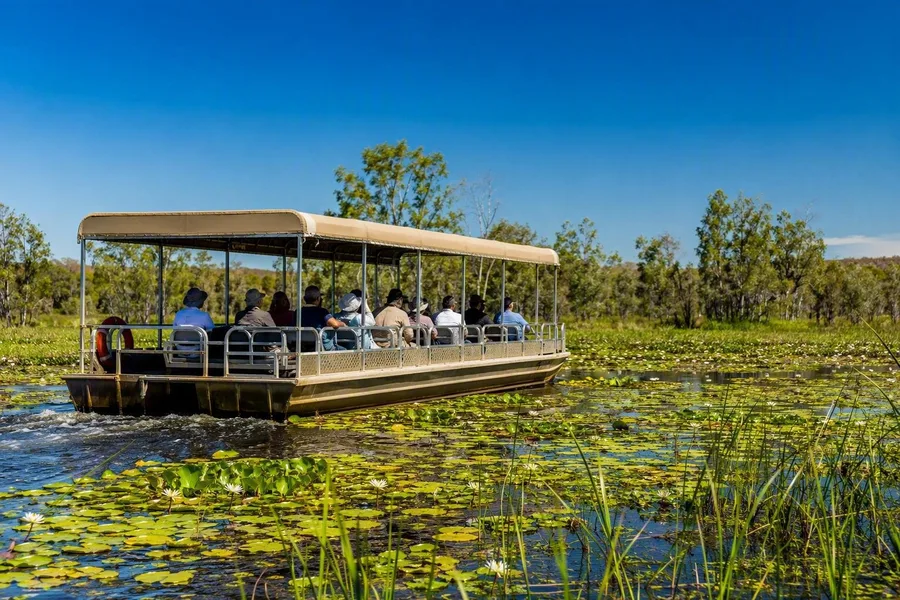 A Yellow Water cruise boat carries passengers across Kakadu’s floodplain.
A Kakadu Park Pass covers entry and ranger activities, and ordinary visits to Ubirr and Burrungkuy need no separate permit. Ubirr, Burrungkuy and Yellow Water are normally reachable by two-wheel-drive vehicle, but water can alter access, especially near Ubirr. Check the Kakadu Access Report and NT Road Report on the day of travel. Burrungkuy’s gates open daily from 7am to 7pm, and its main gallery is open year-round. Yellow Water cruises run throughout the year; reserve popular sunrise and sunset departures ahead of time. Stay on marked paths, do not touch rock art, and keep behind signed boundaries at water.
At Nawurlandja, the view settles on Anbangbang Billabong below: a sheet of water and paperbarks, Burrungkuy’s sandstone rising behind it, and the escarpment running along the far horizon.
Keep exploring