
Bread, Pastry and the Former Tram Stop at Raml Station
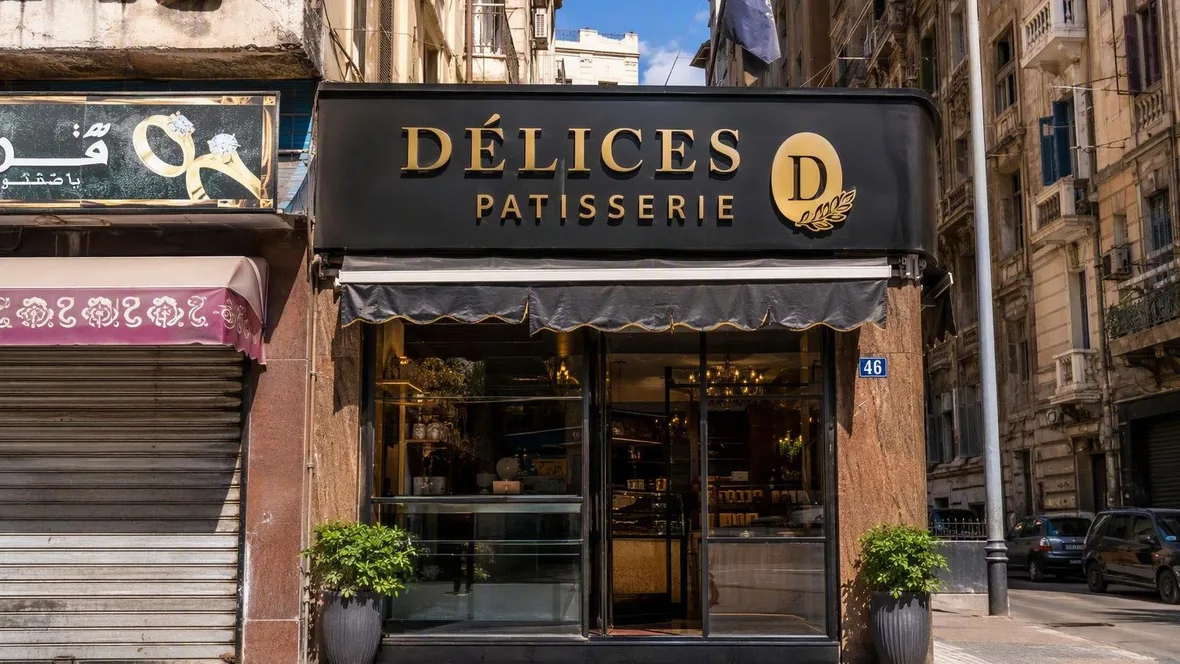
At Raml Station, the former tram stop at 2 Saad Zaghloul Street and Délices Patisserie at number 46 share more than a street. They mark a central Alexandrian district shaped by the traffic of an old tram terminus, shops and places that sell food to take away.
From the former stop to number 46
Raml Station is still a working address, although the tram service has stopped. The former stop is registered at 2 Saad Zaghloul Street, while Délices Patisserie is listed at number 46, in the same Raml Station area. The distance between them is short. It places a bakery business within the old commercial knot around the square.
Délices has operated since 1922. The available sources identify it as a patisserie, not as a producer of ‘aish baladi, Egypt's round everyday bread. That distinction matters. A patisserie sells baked goods, but it does not represent the neighbourhood bakeries that supply bread for ordinary meals.
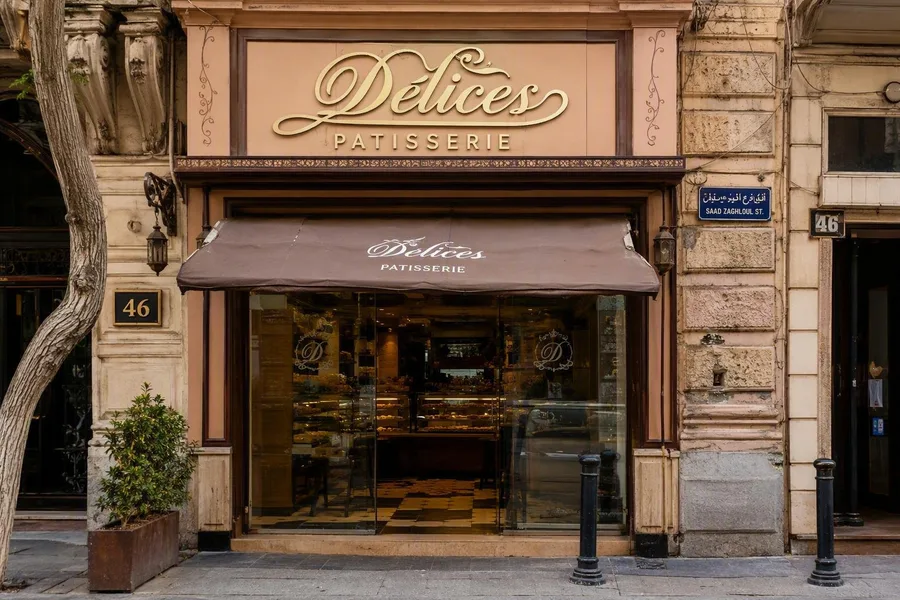 Délices Patisserie stands at 46 Saad Zaghloul Street in Raml Station.
Bread and pastry fill different places in the day. Their proximity on Saad Zaghloul Street comes from an older pattern: shops, cafés, kiosks and cinemas gathered around the terminus and its surrounding streets. Food businesses stood where people changed transport, crossed the square and carried purchases into the city.
In Egyptian Arabic, ‘aish means both bread and life. The language keeps bread close to work as well as eating. Akl el ‘aish links eating bread to earning a living, while ‘aish w malh, bread and salt, describes familiarity and companionship. These phrases do not turn every loaf into a ceremony. They show the place bread holds in the words Egyptians use for livelihood and social ties.
A sandy coast became Ramleh
Raml means sand. Around 1800, the coast east of central Alexandria was a sandy tract where affluent Alexandrians built summer houses. The railway made that coast easier to reach from the city.
A horse-drawn train first left for Ramleh in 1863. Steam locomotives replaced it later that year, the route extended eastward, and electric traction arrived between late 1903 and January 1904. The line connected the old city to a coastal retreat before it became the spine of growing eastern districts.
The Raml corridor ran from Mahattet al-Raml to Victoria through Ibrahimiyya, Sporting, Sidi Gaber, Roushdy, Gleem and San Stefano. Its early passengers travelled towards summer homes, beaches and Victoria College. Later, the same route linked increasingly dense residential areas with the centre.
Raml Station became both an end point and an interchange. Shops, kiosks, cafés and cinemas clustered around the square and along Saad Zaghloul, Safia Zaghloul and Nabi Daniel streets. Italian designs and former cinema façades belong to the late nineteenth- and early twentieth-century expansion around the tramway.
That history explains the setting of a patisserie such as Délices. Its address sits in a district built around trade and passing foot traffic, rather than on an isolated residential street. The tram did not create every shop, but its terminus concentrated the movement that made such businesses practical.
What daily bread does
‘Aish baladi belongs with meals. People use it with ful, soups and stews, and as bread for sandwiches. Research on buying baladi bread records small but important actions: selecting the flat rounds, carrying them home and handling them carefully before a meal.
That is bread's everyday scale. It moves from bakery to household and from household to table. The sequence is simple, but it gives the loaf its steady importance.
Other breads serve other uses. Feeno is a long, soft roll commonly used for sandwiches; shamsi and bataw have stronger ties to Upper Egypt. In Alexandria, baladi bread remains the clearest reference point for daily bread, while pastry shops occupy a different corner of the baking trade.
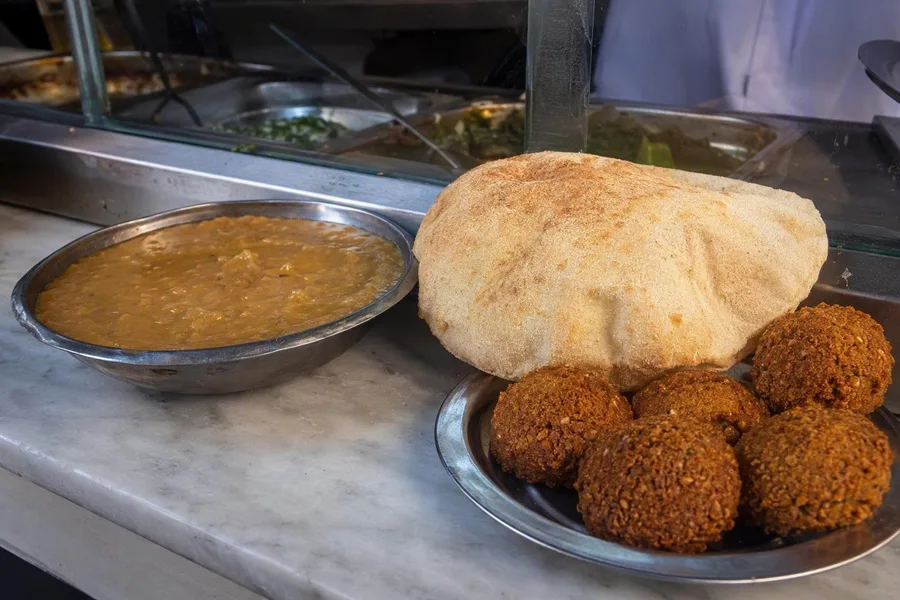 Bread accompanies ful and falafel at Mohamed Ahmed near Raml Station.
Raml Station has one food address that makes bread's role particularly concrete. Mohamed Ahmed, a ful and falafel restaurant near the station, has operated since 1957 and has its own bakery. At this long-established meal counter, bread is part of preparing and serving the food, not an afterthought beside the plate.
Bread also reaches far beyond the central square. In August 2026, sources recorded mobile baladi-bread outlets in the Alexandria districts of Abu Suleiman and Bakos, alongside the city's regular baladi bakeries. The examples point away from the polished image of a historic patisserie and towards the routine work of getting bread into residential neighbourhoods.
Délices belongs to the other side of the city's baking life. Its long presence at Raml Station places pastry among the cafés, retailers and confectioners that developed around the interchange. Its address also sets a useful limit on easy travel writing: not every counter selling baked goods is a bread bakery, and not every purchase belongs to the same meal.
The blue carriages have gone
Until early 2026, the Raml line carried schoolchildren, workers and older residents across eastern Alexandria. Blue-and-white single- and double-deck cars, broad windows and squeaking doors formed part of the route's familiar appearance. The track passed trees, villas and apartment blocks between the centre and Victoria.
That scene belongs to the recent past. The full service between Victoria and Raml stopped on 1 April 2026 for reconstruction. In May, trucks carried away blue-and-white cars and bulldozers removed rails from the old corridor.
Raml Station should therefore not be described as if a heritage tram still passes its food shops. The former route is under reconstruction. Plans retain an east-west connection through the same chain of districts and set out 24 stops, but the proposed vehicles and station designs are not features of the street today.
The closure has not erased the old map. Business listings still use Raml Station as an address, and the station names remain part of the vocabulary used to locate Alexandria's eastern districts. A patisserie at number 46 still carries the name of a stop whose tracks have been lifted.
A short arrival on Saad Zaghloul Street
The honest route starts at the former stop at number 2 and ends along the same street at Délices, number 46.
There is no tram arrival to invent. At the end of Saad Zaghloul Street, the old blue-and-white carriages exist only in the recent record of trucks carrying them away and bulldozers lifting the rails.