
Look beyond Paraguay’s quiet profile on the South American map and you find a country of sharp, grounded contrasts. The Paraguay River separates the populous east from the Chaco in the west. Red-soil farms, subtropical forest and cities such as Asunción and Encarnación fill the eastern half. Across the river, scrub, wetlands and cattle ranches stretch between far-flung settlements. Spanish and Guaraní link these regions. Both languages are official, and many Paraguayans move between them in conversation, music and public life.
In Asunción, the Palacio de los López and the old centre stand close to the river. Mercado 4 spreads across several blocks with food stalls, clothes and household goods. At street corners and family tables, people share cold tereré from a guampa and eat chipa, sopa paraguaya and grilled meat.
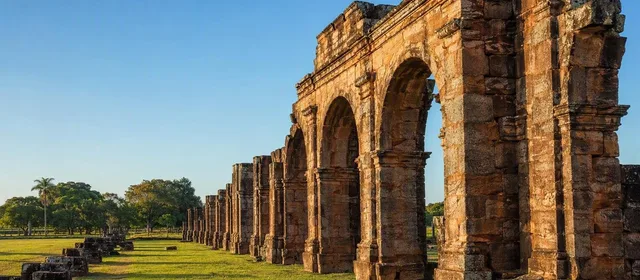
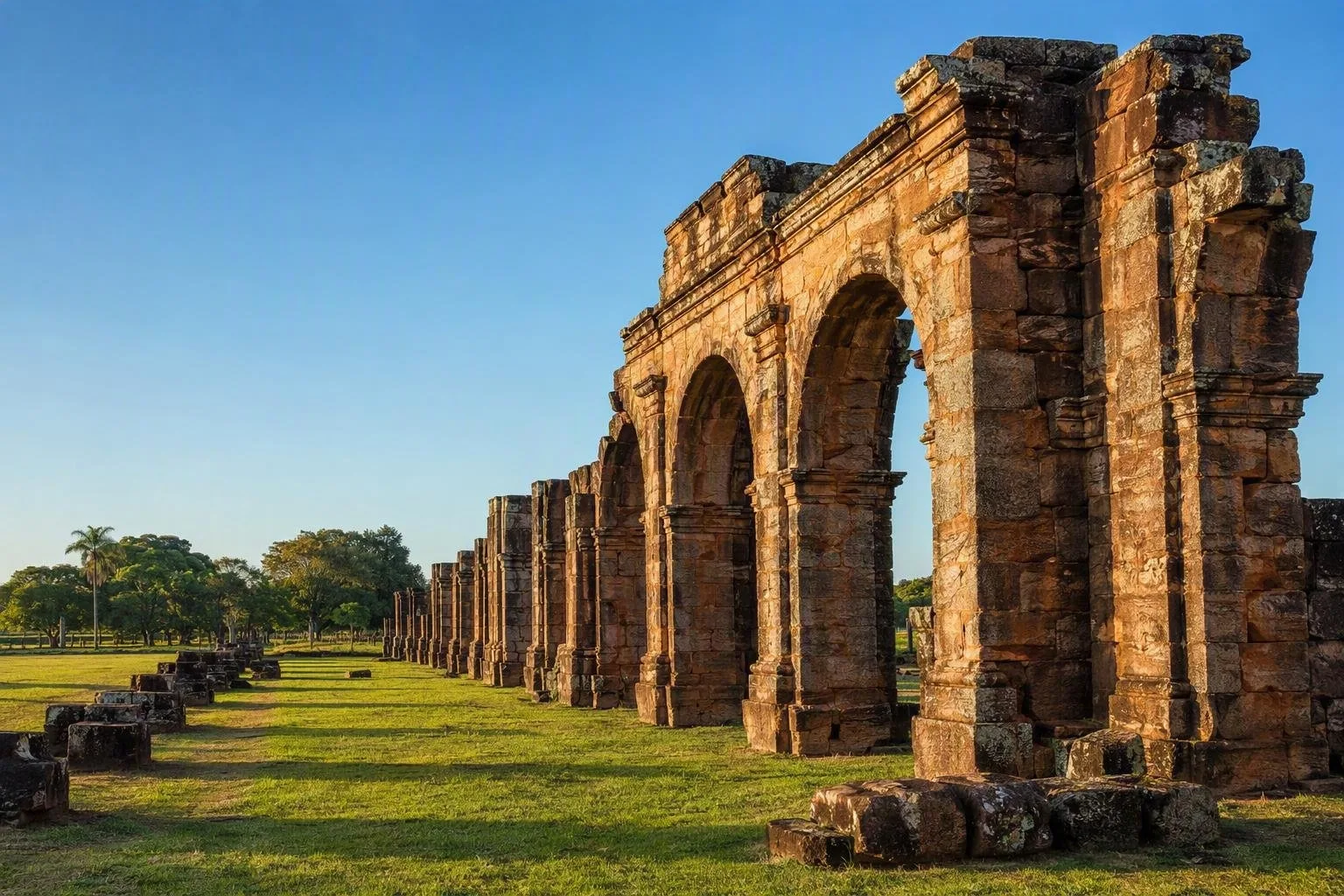
South of the capital, La Santísima Trinidad de Paraná and Jesús de Tavarangue show the scale of the Jesuit missions in stone arcades, carved walls and open courtyards. Encarnación, on the Paraná River, makes a useful base for the sites. Far west, Mennonite settlements around Filadelfia run farms and towns in a dry landscape far removed from the humid east. Indigenous communities have lived in the Chaco for far longer. Stay long enough to hear Guaraní in ordinary conversation, share tereré and see how much ground lies between the river cities and the open west.


