
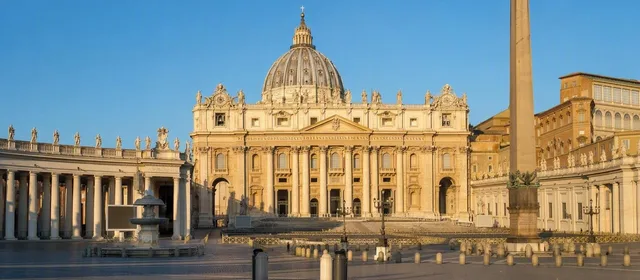
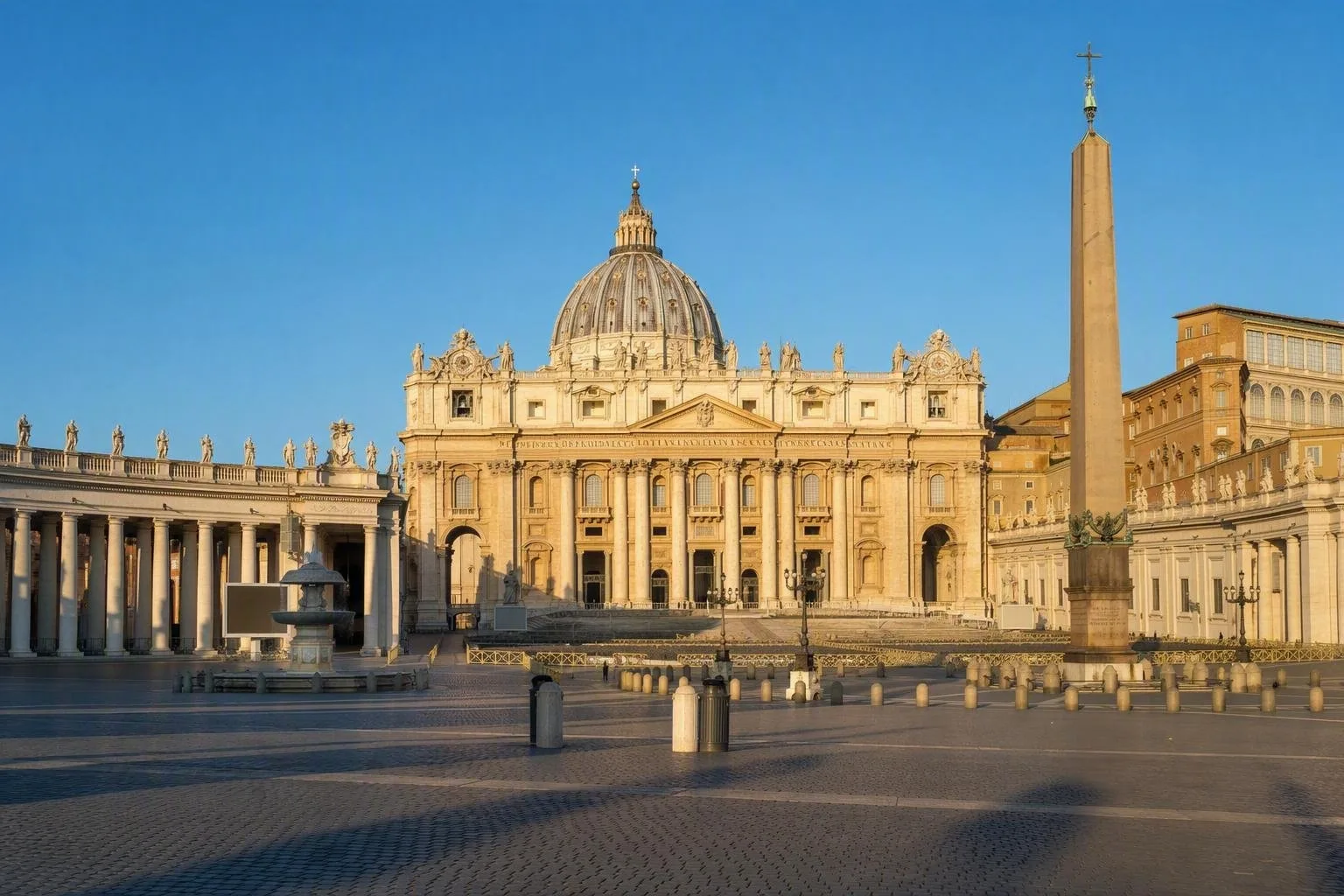
Vatican City takes up only 44 hectares, but St Peter’s Basilica, the Vatican Museums and the walls behind them hold some of Rome’s most closely watched treasures. Bernini’s colonnades sweep around St Peter’s Square, where pilgrims gather for papal appearances and visitors cross the open paving toward the basilica. Inside, Michelangelo’s Pietà stands near papal tombs, while the dome rises above a vast interior of marble, mosaics and chapels. A few streets away, Rome’s traffic and apartment blocks press against the Vatican boundary.
The Vatican Museums trace centuries of papal collecting through Roman sculpture, painted maps, tapestries and the frescoed rooms used by Pope Julius II. Raphael painted the rooms that bear his name, and Michelangelo covered the Sistine Chapel ceiling before returning to paint the Last Judgment behind the altar. The crowds can be intense, but individual details hold attention: a carved sarcophagus, a gilded ceiling, a line of figures across a fresco.
This is also a working state and the seat of the Roman Catholic Church. Clergy, Swiss Guards and Vatican staff move through the same streets and squares used for worship and ceremonies. Most of the gardens, offices and residences remain out of view behind high walls. From Borgo or Prati, you can walk into St Peter’s Square in minutes, then step back into Rome just as quickly. Come for the masterpieces, and leave time to look at the buildings, the square and the daily life around them.


