Sight · Serbia
Belgrade Fortress
Belgrade’s historic citadel occupies the ridge above the confluence of the Sava and Danube, at the western edge of the old centre. Its Upper and Lower Towns preserve Roman, medieval Serbian, Ottoman and Austrian layers.
Get oriented
Belgrade Fortress is a fortified complex, not a single building. The Upper Town occupies the crest; the Lower Town runs down toward the rivers. Kalemegdan Park wraps around the fortifications, so the two are often experienced as one continuous public space.
Enter on foot from the end of Knez Mihailova, Belgrade’s main pedestrian street. Start in the Upper Town for the principal gates, walls and viewpoints, then descend only if you have time and energy for the climb back.
What the walls contain
The site developed over successive military eras. A Roman castrum stood here as part of Singidunum; Belgrade first became the Serbian capital under Despot Stefan Lazarević in the early 15th century. Ottoman and Austrian rebuilding later gave much of the complex its present ramparts, gates and bastions.
Look for these anchors rather than trying to see everything:
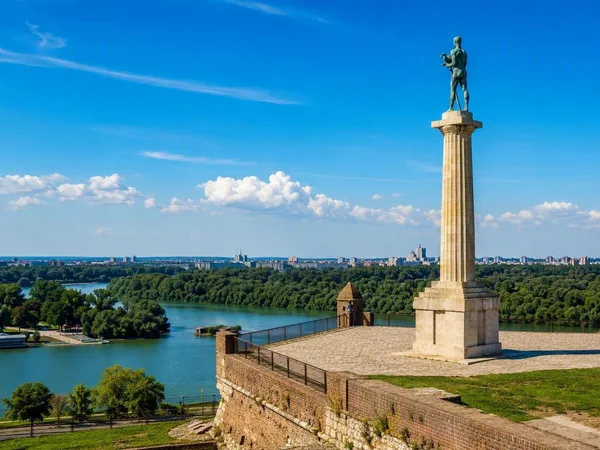
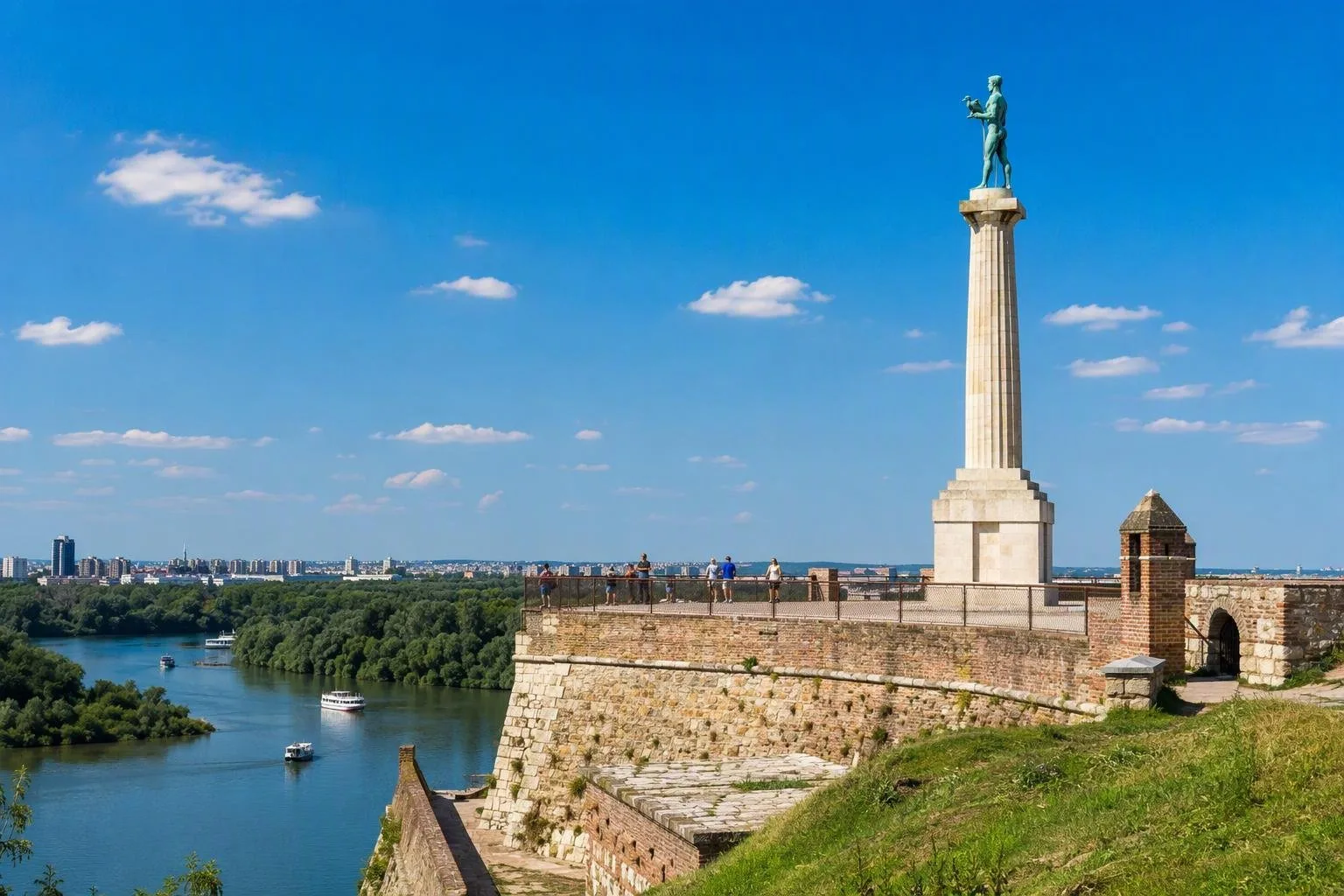
- The Victor (Pobednik): Ivan Meštrović’s bronze monument, installed in 1928, stands above the confluence and is the essential viewpoint.
- Despot Gate and Castellan Tower: a surviving medieval entrance complex in the Upper Town.
- Sahat Gate and Clock Tower: an 18th-century gateway ensemble.
- Roman Well: despite its familiar name, it belongs to the Austrian rebuilding of the 18th century.
- Ružiца Church and the Chapel of Saint Petka: compact religious sites in the Lower Town.
- Neboǰša Tower: at the Danube side of the Lower Town, near the former harbour approach.
A practical walking route
From the park entrance, pass through the Upper Town gates and work west to the Victor. Continue along the ramparts past the Military Museum and its outdoor displays, then choose between returning through the Upper Town or descending to the Lower Town for Ružica Church, Saint Petka and Nebojša Tower.
Allow 90 minutes for the Upper Town and viewpoints. Add at least another hour for the Lower Town or indoor stops. The Lower Town has slopes, steps and uneven historic surfaces; sturdy shoes make a real difference.
Access and ticketed interiors
The outdoor fortress and park are free to explore. Individual enclosed sites have separate admission and schedules. The Roman Well, casemates, military bunker, Great Gunpowder Warehouse and Nebojša Tower are among the ticketed places.
Neboǰša Tower normally opens Wednesday–Sunday. Several other interiors run Tuesday–Sunday in the April–October season, while winter arrangements are more limited. The Great Gunpowder Warehouse and Military Bunker are for pre-arranged organised visits only. Plan the outdoor route as the core visit; treat interiors as additions.
Timing and care
Late afternoon suits the river-facing ramparts, while daytime is better for ticketed interiors. The open ground can be exposed to sun and wind.
This is a protected cultural monument. Stay on established paths, do not climb masonry or military exhibits, and do not mark the walls. Ružica Church and the Chapel of Saint Petka are active religious spaces: enter quietly and dress respectfully.
From the magazine
Stories about Belgrade Fortress
Editorial stories linked directly to Belgrade Fortress.
No stories about Belgrade Fortress have been published yet.
Routes from our editors
Travel through Belgrade Fortress
Editorial routes connecting Belgrade Fortress with other countries, cities and hotspots.
No routes through Belgrade Fortress have been published yet.
More in Serbia
Related hotspots
Other cities, nature areas and places within Serbia.