
City · Serbia
Belgrade
Belgrade is Serbia’s capital at the meeting of the Sava and Danube. Its historic core runs from Belgrade Fortress and Kalemegdan through Knez Mihailova to Republic Square and Skadarlija.
Get your bearings
Belgrade is best read from the water inward. The old core stands on the high ground above the Sava–Danube confluence; New Belgrade spreads across the flatter left bank of the Sava. Start at Kalemegdan, then use the pedestrian spine of Knez Mihailova Street to reach Republic Square.
The centre rewards walking, but do not underestimate its slopes. Keep one day for the fortress and central streets, then use a second day for Vračar, Zemun or the riverbanks rather than trying to criss-cross the entire city.
Kalemegdan and the old centre
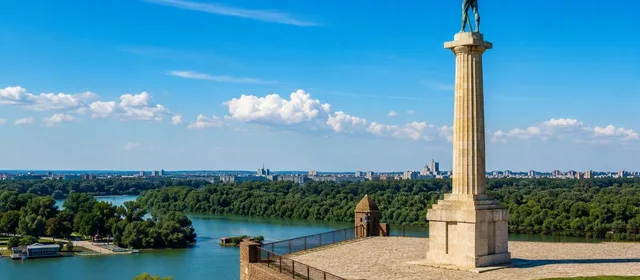
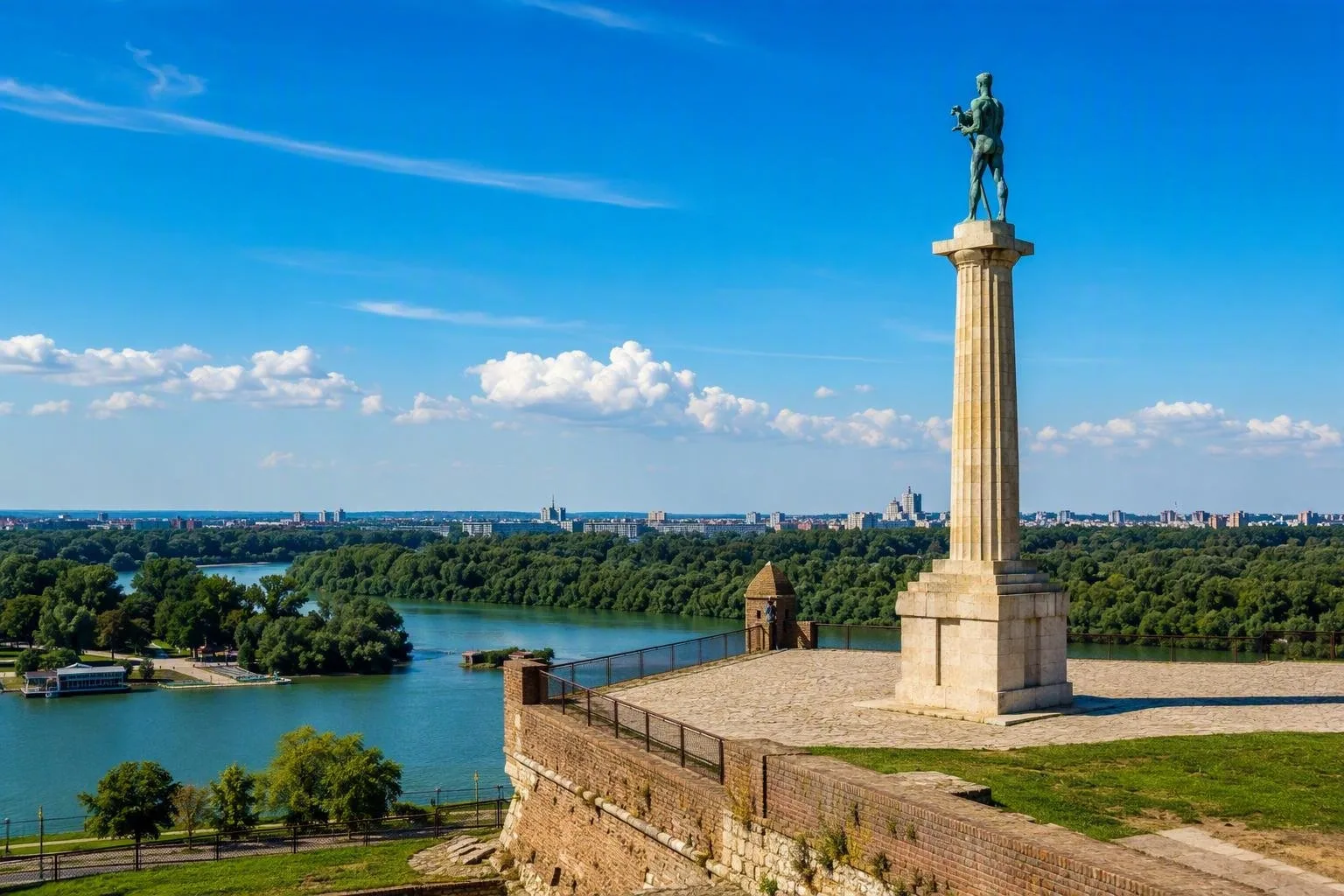
Belgrade Fortress is the essential first stop: a defensive site shaped from the Roman period through Ottoman, Serbian and Austro-Hungarian rule. Walk its ramparts and park paths to the plateau by the Victor monument for the clearest view over the confluence and New Belgrade.
Within the complex, the Military Museum, Roman Well, Ružica Church and St Petka’s Church give the walk substance beyond the panorama. From the main gate, follow Knez Mihailova south through the pedestrian zone. Continue to Republic Square, then turn into cobbled Skadarlija for traditional kafanas and Serbian cooking.
Museums, Vračar and rivers
Choose museums by subject rather than attempting a sweep. The National Museum is the broad art-and-history choice; the Nikola Tesla Museum focuses on the inventor’s legacy; the Museum of Yugoslavia addresses the former federal state. The Museum of Contemporary Art stands across the Sava near Ušće.
For a change of scale, go south to the Temple of Saint Sava on the Vračar plateau. Its Serbo-Byzantine structure and extensive interior mosaics make it one of the city’s defining landmarks.
For time outdoors, use the rivers deliberately:
- Zemun: cobbled streets, the Danube quay and Gardoš/Millennium Tower.
- Ada Ciganlija: the artificial lake for walking, cycling and summer swimming.
- Sava and Danube promenades: parks, paths and waterside restaurants.
Arrivals and getting around
Nikola Tesla Airport lies west of the centre. Bus 72 runs to Zeleni Venac; the A1 minibus goes to Slavija and is paid in cash in Serbian dinars. Bus 600 connects the airport with Beograd Centar station.
For rail travel, use Beograd Centar (Prokop), the city’s principal rail hub. It is the practical departure point for the Belgrade–Bar route as well as other domestic and international services.
Regular city buses, trams, trolleybuses and BG Voz are free for passengers. The historic centre is usually quicker on foot; use public transport for Vračar, Zemun, Ada and New Belgrade. The Beograd Plus app is useful for live service information and disruptions.
Practical essentials
Serbia uses the Serbian dinar (RSD). Central parking is difficult, so a car is a liability for a city break. Use marked taxi vehicles or arrange an airport taxi at the official desk; decline unsolicited rides in the arrivals hall.
Summer heat makes Kalemegdan and the long riverside walks more comfortable early or late in the day. In winter, museums, galleries and kafanas provide a more efficient itinerary.
From the magazine
Stories about Belgrade
Editorial stories linked directly to Belgrade.
No stories about Belgrade have been published yet.
Routes from our editors
Travel through Belgrade
Editorial routes connecting Belgrade with other countries, cities and hotspots.
No routes through Belgrade have been published yet.
More in Serbia
Related hotspots
Other cities, nature areas and places within Serbia.
There are no other hotspots in Serbia yet.