
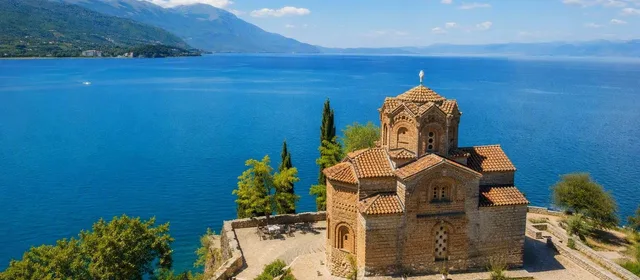
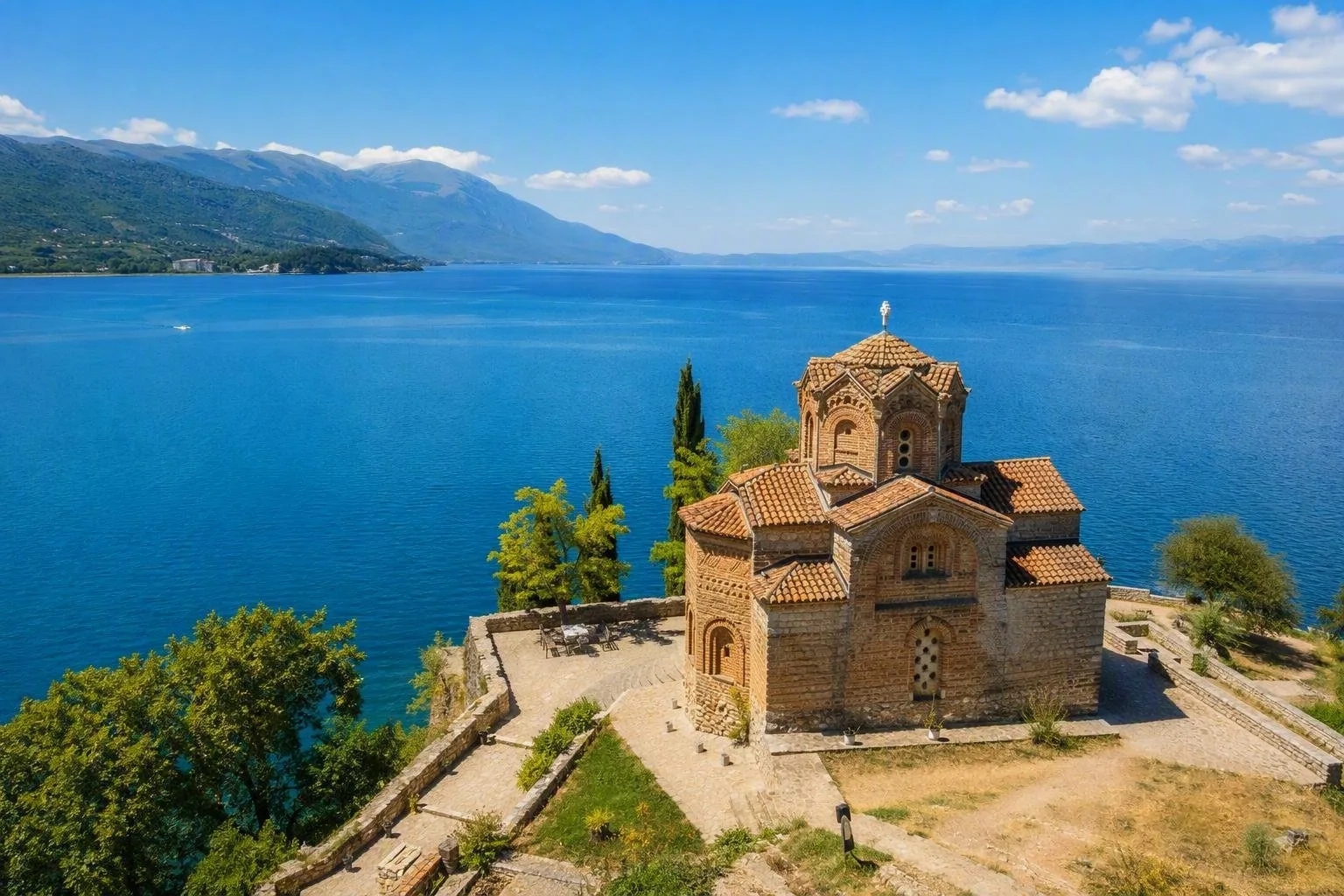
North Macedonia packs its most telling contrasts into short distances. In Skopje, the fifteenth-century Stone Bridge crosses the Vardar between the Ottoman Old Bazaar and the newer city centre. Cobblers, jewellers and tea houses fill the bazaar’s narrow streets, while mosques, Orthodox churches and old caravanserais recall the traders and empires that passed through. Across the country, Roman ruins, Byzantine frescoes, Ottoman buildings and Yugoslav-era monuments often stand within the same town. Lake Ohrid gives these layers a quieter setting. Cobbled lanes rise through Ohrid past old houses with white walls and projecting upper floors. The Church of Saint John at Kaneo sits above the water, and Plaošnik holds early Christian and medieval remains. Ohrid also played an important part in medieval Slavic learning.
Beyond the lake, forests and high pastures cover Mavrovo, Pelister and the Šar Mountains. Walkers follow marked trails, and stone villages, monasteries and sheep farms remain part of daily life in the hills.
The table changes from place to place, but baked beans, peppers, white cheese and grilled meat appear often. Order tavče gravče, a baked bean dish with peppers and onions, or kebapi with flatbread. Vineyards around Tikveš produce much of the country’s wine. Take time for Skopje’s old streets, Ohrid’s lakeside churches and a meal in a mountain town, and North Macedonia soon feels familiar.


