City · Lithuania
Vilnius
Vilnius is Lithuania’s capital, centred on a UNESCO-listed historic core where medieval streets carry Gothic, Renaissance, Baroque and Classical layers. Its former Jewish quarter and surviving Choral Synagogue make the city essential for understanding Litvak history.
Read the old town
Vilnius stands at the meeting of the Neris and Vilnia rivers in south-eastern Lithuania. Its historic centre is a 352-hectare UNESCO World Heritage site: follow the irregular medieval street plan rather than expecting a formal grid. Gothic brickwork, Renaissance façades, Baroque churches and later Classical buildings often sit within a few minutes’ walk.
For Jewish Vilnius, begin around Vokiečių gatvė, then turn into the tighter lanes of Žydų, Gaono, Stiklių and Mėsinių streets. This was the historic Jewish quarter: a working district of homes, workshops, prayer houses, study spaces and shops. It was not the same thing as the Nazi-era ghettos.
Jewish Vilnius: what remains
Vilnius was known in Yiddish as Vilne and developed into a major centre of rabbinical learning, publishing and Yiddish culture. YIVO, the Institute for Jewish Research, was founded here in 1925.
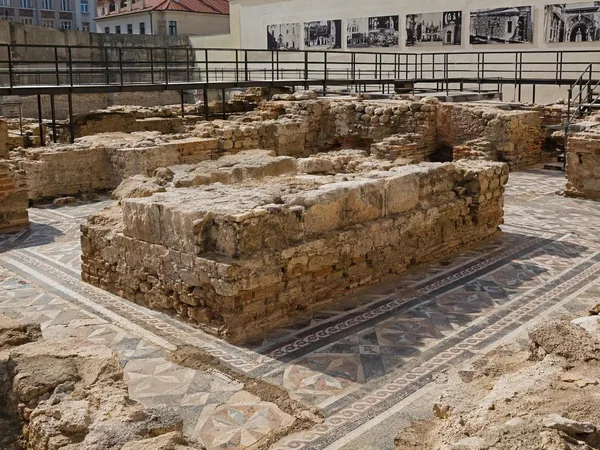
The most important address is Žydų g. 3, the site of the Great Synagogue and its surrounding shulhoyf, once a dense complex of smaller prayer houses, communal facilities and the Strashun Library. The synagogue was devastated during the Second World War; its remaining structures were demolished under Soviet rule. Archaeological work has revealed elements including the bimah, ritual baths and foundations. Expect an evolving memorial and research site, not an intact synagogue.
Nearby, a plaque and sculpture recall the Vilna Gaon, Elijah ben Shlomo Zalman, the eighteenth-century scholar whose rigorous textual study shaped Lithuanian Jewish learning.
Ghetto history and remembrance
The German occupation created the Small and Great Ghettos in September 1941. The Great Ghetto occupied streets south of the former Jewish quarter and was liquidated in September 1943. Look for the memorial and plan at the former main gate on Rūdninkų g. 18; the former ghetto library stands at Žemaitijos g. 4.
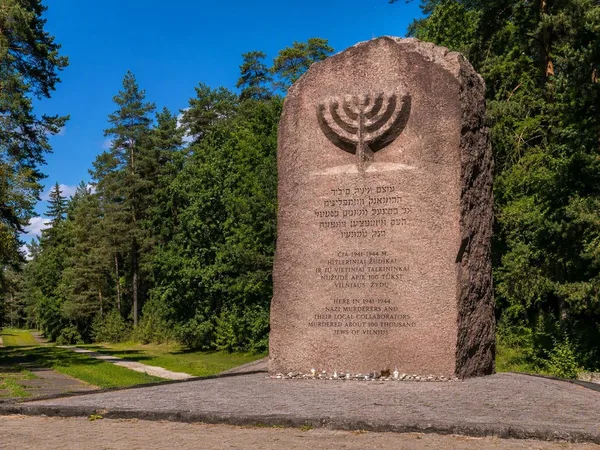
These streets are public, lived-in parts of the old town. Read plaques carefully and avoid treating sites of persecution as scenery. Paneriai, outside central Vilnius, is a separate memorial visit: it was a principal site of Nazi mass murder of Jews from Vilnius and other persecuted people.
The living synagogue and museum context
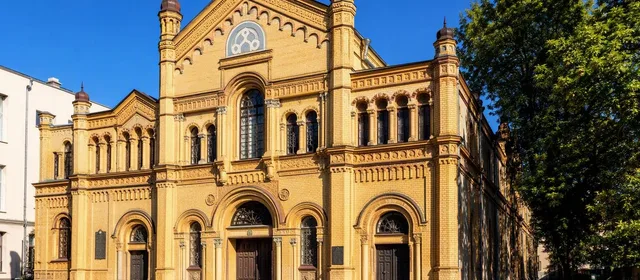
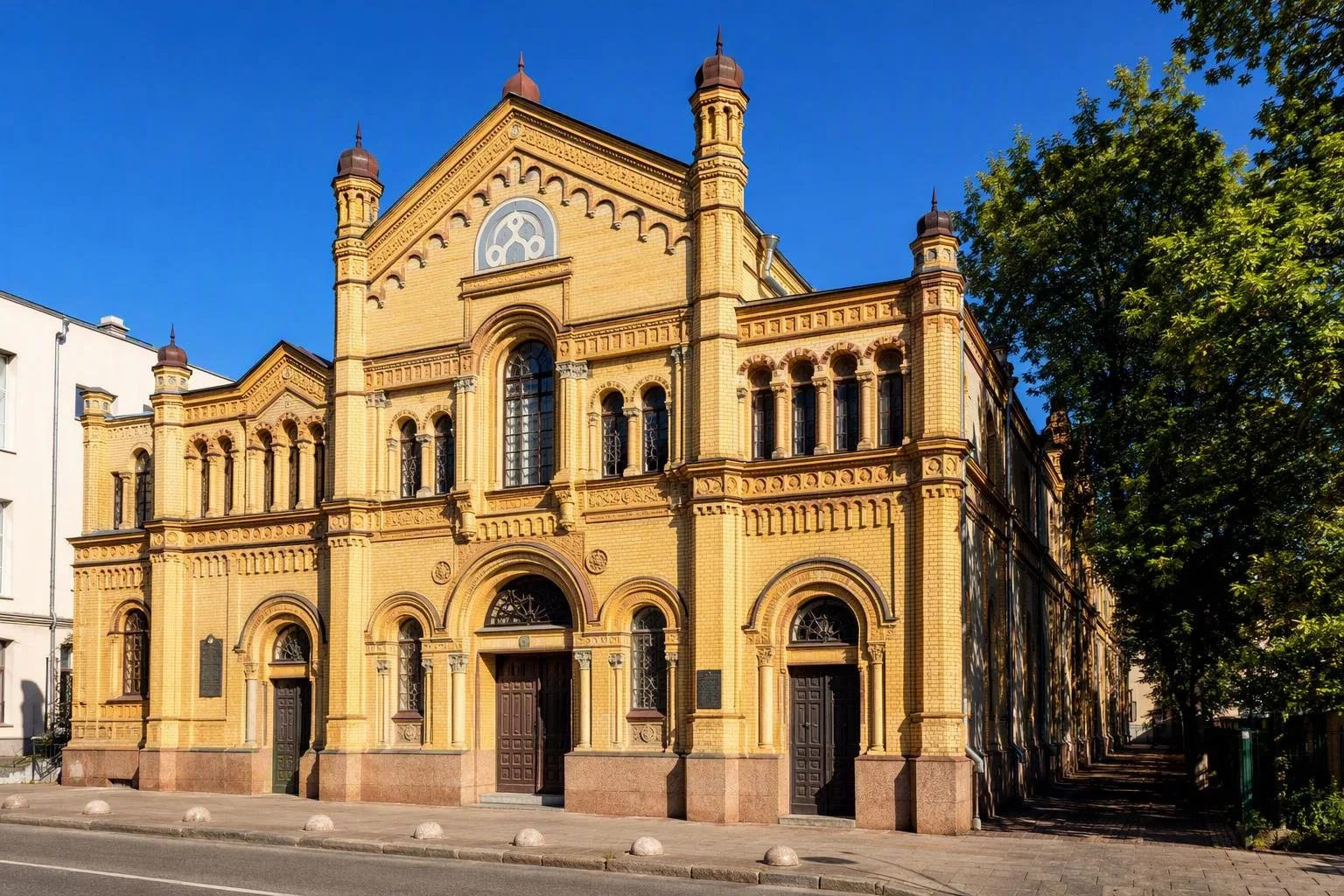
The Choral Synagogue, Pylimo g. 39, built in 1903, is Vilnius’s only functioning synagogue. Its yellow-brick façade combines Neo-Romanesque and Moorish-inspired elements. It remains a house of worship, not a museum: community needs, services and security determine entry. Arrange a visit in advance and follow instructions on dress, head covering, photography and devices.
For wider context, use the Museum of Culture and Identity of Lithuanian Jews and the Holocaust Exhibition. The first addresses religion, languages, literature, art and everyday life; the second documents persecution, ghettos, murder, resistance, survival and rescue.
Getting around
The historic centre is best covered on foot. Cobblestones and uneven pavements are common, so wear stable shoes. A useful sequence is Vokiečių gatvė, the former Jewish-quarter lanes, the Great Synagogue site, the ghetto gate and then Pylimo Street. Allow unhurried time: the essential evidence is often a street name, a plaque or an absence in the urban fabric.
From the magazine
Stories about Vilnius
Editorial stories linked directly to Vilnius.
No stories about Vilnius have been published yet.
Routes from our editors
Travel through Vilnius
Editorial routes connecting Vilnius with other countries, cities and hotspots.
No routes through Vilnius have been published yet.
More in Lithuania
Related hotspots
Other cities, nature areas and places within Lithuania.