
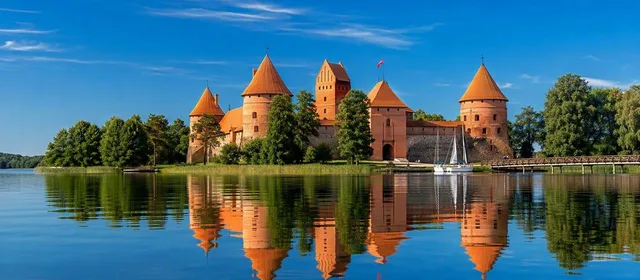
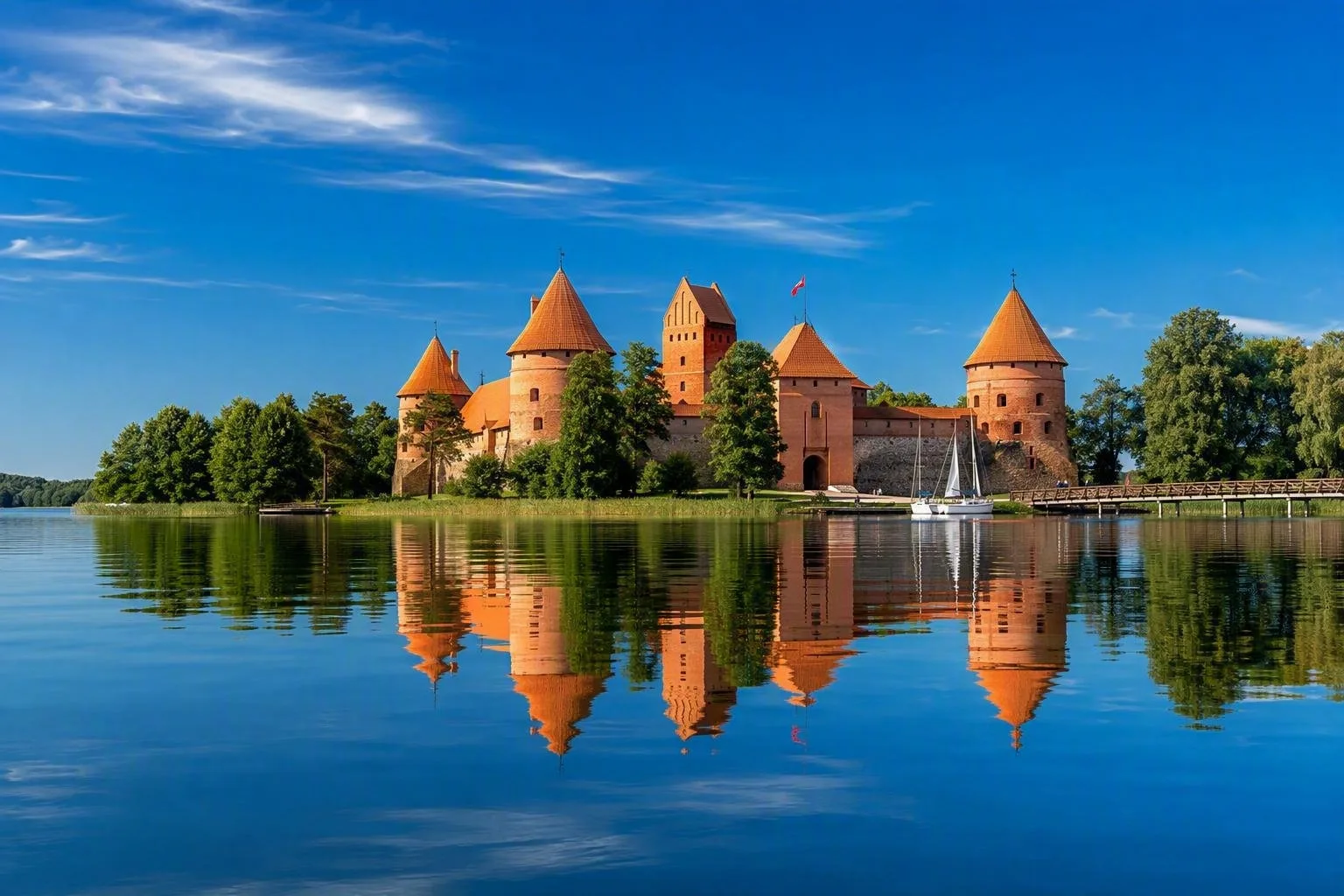
Look beyond Vilnius’s church towers and Lithuania quickly changes scale. In the capital, baroque spires rise over narrow old-town streets, while the wooden houses of Šnipiškės stand across the Neris from glass office blocks. Polish, Jewish, Russian and Soviet history has left visible marks on the city, but its courtyards, bookshops and food halls feel firmly current. An easy trip from Vilnius, Trakai Island Castle stands in Lake Galvė. The town’s Karaim community still keeps its language and bakes kibinai, crescent-shaped pastries filled with meat or vegetables.
Kaunas brings broad avenues and a large collection of interwar modernist buildings from its years as Lithuania’s temporary capital. In Klaipėda, old warehouses and Germanic details recall the city’s Prussian past. Ferries cross the lagoon to the Curonian Spit, where pine forest and high dunes run between the Baltic Sea and the lagoon. Nida and other fishing villages sit on the sheltered side; long beaches face the open sea.
Inland, lakes cut through the forests of Aukštaitija and wooden farmsteads still dot the countryside. Rye bread, beet soup, smoked fish and potato dishes appear on everyday tables, linking inland produce with the coast. Lithuania is small enough to hold these contrasts close together. Take a few unhurried days, and move beyond the main squares.


