
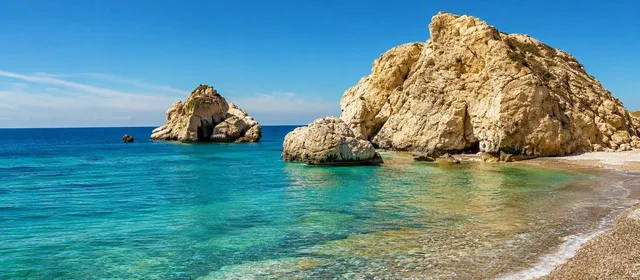
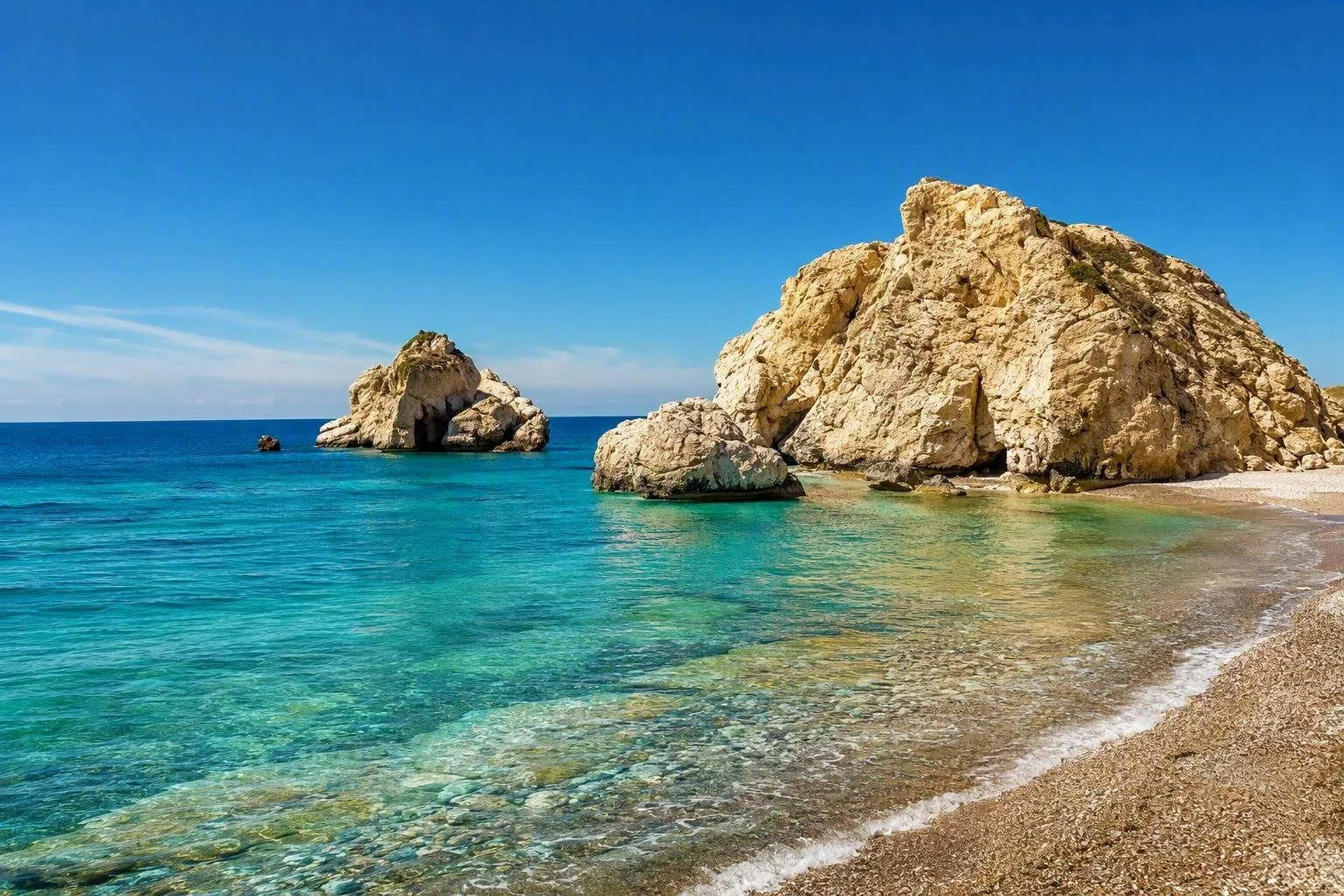
Cyprus is often reduced to beaches, and the clear water around Petra tou Romiou shows why. But limestone coves are only one part of an island marked by copper, trade, conquest and faith. In the Troodos Mountains, pine-lined roads pass stone villages and small Byzantine churches with painted interiors that have survived for centuries. Below them, vines and olive trees cover the slopes around Omodos. At Choirokoitia, reconstructed circular houses show how people lived in a Neolithic settlement thousands of years before the island's medieval castles. Short drives bring sharp changes in landscape and history.
Inside Nicosia's Venetian walls, Greek Cypriot and Turkish Cypriot neighbourhoods sit on either side of the UN buffer zone. Workshops, cafés, churches, mosques and the restored Büyük Han line streets shaped by Ottoman and British rule. The division remains part of the city's daily geography.
Cooks grill halloumi, slow-cook kleftiko and preserve walnuts in syrup. Tavernas bring meze to the table in rounds of small plates, while vineyards in the southern foothills make Commandaria, the island's long-established sweet wine. Leave time for mountain villages, old city streets and long lunches as well as the beach.


