
Bulgaria

Frescoed monasteries, mountain villages and Black Sea towns

Bulgaria

Thracian tombs, Orthodox monasteries and Ottoman-era houses sit between high mountains, broad valleys and the Black Sea.

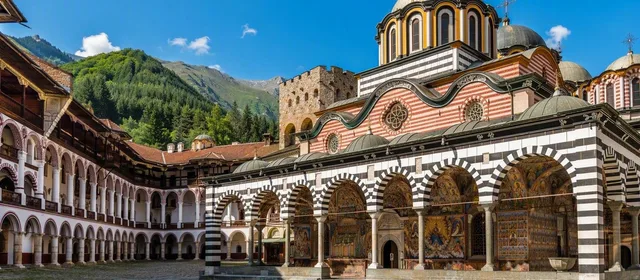
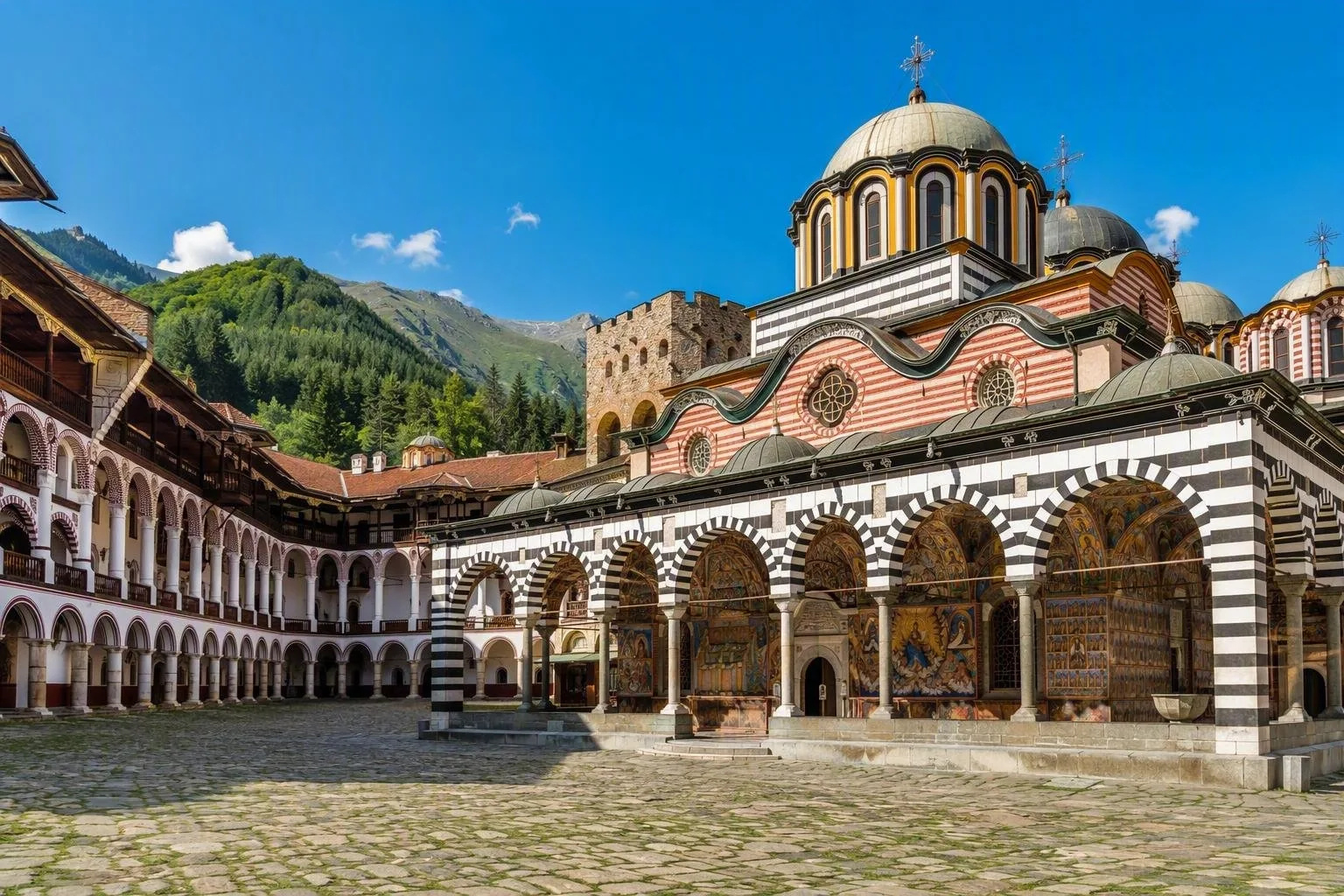
Bulgaria offers far more than a summer beach break or a winter ski run. In the Rila Mountains, red-and-white arches surround the courtyard at Rila Monastery, where frescoes cover the walls beneath steep, wooded slopes. Trails run through Rila and Pirin, past glacial lakes, pine forest and stone refuges. To the east, the Balkan Mountains cut across the country, with villages of timber and stone below their ridges.

History appears at street level in the cities. In Plovdiv, a Roman theatre stands above the old town’s painted 19th-century houses, while cafés and galleries fill the lanes nearby. Near Kazanlak, painted Thracian tombs record a culture that flourished long before Roman rule. Sofia puts Roman ruins beside the Banya Bashi Mosque, the Alexander Nevsky Cathedral and broad socialist-era boulevards.

Meals give the day its local texture. Order shopska salad with tomatoes, peppers, cucumber and grated white cheese, or banitsa, crisp pastry layered with cheese. On hot days, tarator brings yoghurt, cucumber, dill and garlic to the table. On the Black Sea, Nessebar packs medieval churches and wooden houses onto a small peninsula, while larger resorts spread along the coast. Leave room for the towns, mountain roads and family-run places between the headline sights, and Bulgaria will stay with you.

When to go

Best time to travel

Monthly values are indicative average maximum temperatures for Sofia. The Black Sea coast, Danube Plain and mountain regions have meaningful regional variation. Monthly values are indicative average maximum temperatures for Sofia. The Black Sea coast, Danube Plain and mountain regions have meaningful regional variation.

jan4°C feb7°C mar12°C apr17°C may22°C jun26°C jul29°C aug29°C sep24°C oct18°C nov11°C dec5°C

Weather in the capital

Practical Bulgaria

On every country page we show the current weather for the capital.

Sofia
Morning13°Cpartly cloudy
Afternoon20°Cpartly cloudy
Evening18°Covercast
today21°C / 13°Chigh and low

Current forecast by Open-Meteo

Getting around

Sofia has a metro, trams and buses. Trains and coaches link the main cities, while a car helps with smaller villages, monasteries and mountain areas.

Paying in Bulgaria

The currency is the Bulgarian lev (BGN). Cards are widely accepted in cities and resorts, but cash helps at markets, in villages and at small businesses.

Where to stay

Cities and coastal resorts have hotels and apartments. Villages and hiking areas offer family guesthouses and mountain huts.

Before you leave

Worth knowing

A practical starting point for your trip. Check current conditions and local information before you leave.

01

Language and alphabet

Bulgarian is the official language and uses the Cyrillic alphabet. English is common in major visitor areas but less so in small towns.

02

Calling code

Bulgaria’s international calling code is +359.

03

Emergency number

Call 112 for police, fire or ambulance services.

04

Driving side

Traffic drives on the right, and drivers overtake on the left.

05

Road vignette

Most vehicles up to 3.5 tonnes need an electronic vignette for many roads outside towns. Rental vehicles often include one; confirm this with the provider.

06

Local transport tickets

Ticket systems vary by city. Buy or validate tickets where required. Sofia accepts contactless bank-card payment on much of its public transport.

07

Trains and buses

Trains link major cities but can be slow. Intercity buses often run more frequently; buy tickets ahead for busy routes and check the departure station.

08

Cards and cash

Cards are widely accepted in cities, hotels and larger shops. Cash remains useful at markets, small cafés and rural businesses.

09

Tipping

In restaurants, a tip of about 10% is usual when service is good. Check the bill for a service charge first.

10

Meal times

Lunch commonly falls between noon and 2pm. Dinner often starts after 7pm, and restaurants in larger towns may serve food through the afternoon.

11

Business hours

Many shops open from about 9am to 6pm on weekdays. Malls and supermarkets usually stay open later and often trade at weekends.

12

Measurements

Bulgaria uses the metric system: kilometres, metres, litres and degrees Celsius. Written numbers commonly use a decimal comma.