
Belarus

Forests, fortresses and broad avenues

Belarus

Belarus brings together Minsk’s Soviet-scale streets, castle towns and long stretches of forest and wetland.

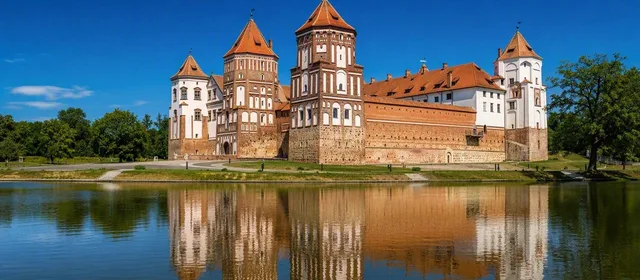
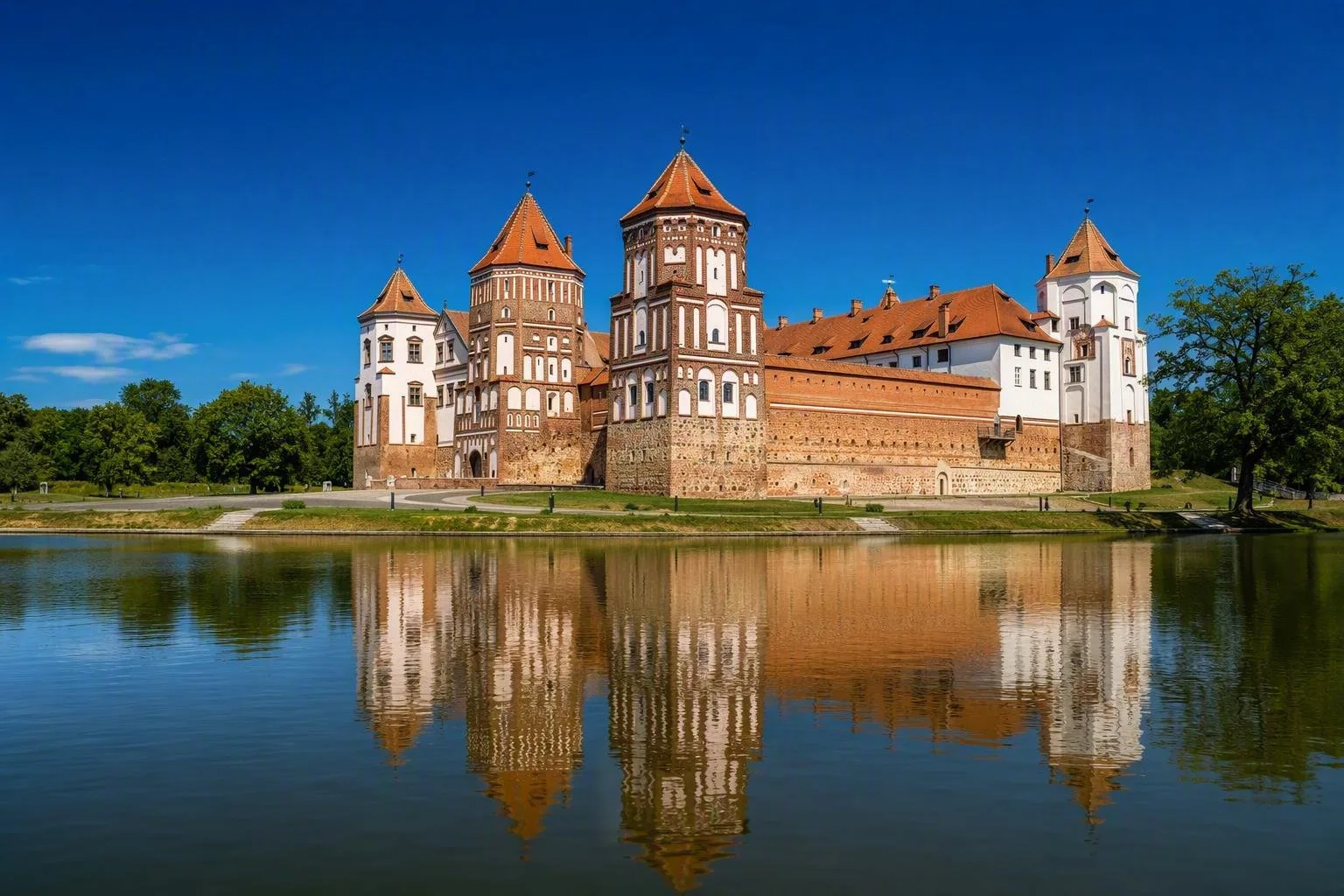
Look beyond Minsk’s vast avenues and Belarus becomes a country of brick castles, village food and low, wooded land. The capital sets up the contrast. Stalinist-era buildings line Independence Avenue, while the Upper Town holds restored churches, small squares and cafés. A few hours west, the red-brick towers of Mir Castle stand beside a pond. At nearby Nesvizh, the former Radziwiłł residence recalls the Polish-Lithuanian Commonwealth, when this family held land and influence across the region.

Most of the country lies flat, but the scenery never feels empty. Pine and birch woods spread across the centre, lakes dot the north, and the Pripyat River crosses the marshes of Polesia in the south. In Belovezhskaya Pushcha, the Belarusian part of the Białowieża Forest, ancient woodland shelters European bison.

The twentieth century remains close in many places. Brest Fortress preserves the site of fierce fighting in 1941, and war memorials stand in towns and villages across the country. Meals offer a more domestic picture: draniki potato pancakes, rye bread, mushrooms and berries appear regularly on tables and menus. Base yourself in Minsk, then make time for Mir, Nesvizh or the forests and wetlands beyond the capital. Belarus suits travellers who like history in the open air and unhurried days outside the city.

When to go

Best time to travel

Monthly values are indicative average maximum temperatures for Minsk. Conditions vary meaningfully between the cooler north, the central plains and the warmer, wetter Polesia region in the south. Monthly values are indicative average maximum temperatures for Minsk. Conditions vary meaningfully between the cooler north, the central plains and the warmer, wetter Polesia region in the south.

jan-2°C feb-1°C mar5°C apr13°C may19°C jun22°C jul24°C aug23°C sep17°C oct10°C nov3°C dec-1°C

Weather in the capital

Practical Belarus

On every country page we show the current weather for the capital.

Minsk
Morning12°Covercast
Afternoon17°Covercast
Evening16°Cpartly cloudy
today18°C / 11°Chigh and low

Current forecast by Open-Meteo

Getting around

Intercity trains link Minsk with major regional centres. Scheduled buses and marshrutka minibuses serve many smaller towns. Minsk has a metro, buses, trolleybuses and trams.

Paying locally

Cards are widely used in larger cities, but cash helps with small purchases and travel outside urban centres. Major towns have ATMs.

Where to stay

Minsk and regional centres have hotels and serviced apartments. Smaller towns offer fewer options. Rural guesthouses and farmsteads operate near lakes, forests and national parks.

Before you leave

Worth knowing

A practical starting point for your trip. Check current conditions and local information before you leave.

01

Official languages

Belarusian and Russian are both official languages. Russian is widely used in daily life, while Belarusian appears on signs and in cultural settings.

02

Alphabet and place names

Belarusian and Russian use the Cyrillic alphabet. Latin spellings of place names can vary, so a street or station name in Minsk may appear in more than one transliteration.

03

Calling code

The international calling code for Belarus is +375.

04

Driving side

Traffic drives on the right, and drivers normally overtake on the left.

05

Measurements

Belarus uses the metric system. Distances appear in kilometres, fuel in litres and weights in grams or kilograms.

06

Mobile connections

Several mobile networks cover the country. Shops generally require identification to issue a local prepaid SIM, and plans commonly include mobile data.

07

Intercity trains

Long-distance tickets usually assign a seat or berth. Overnight trains may have open sleeping carriages, four-berth compartments and two-berth compartments.

08

Urban transport

Ticket systems vary by city and vehicle. Buy the correct ticket or fare product, and validate paper tickets after boarding where required. Minsk also uses electronic travel cards.

09

Marshrutka minibuses

Marshrutkas follow fixed urban and intercity routes and often have limited luggage space. Passengers usually pay the driver, while some longer routes accept advance reservations.

10

Tipping

Check whether a restaurant includes a service charge. Otherwise, diners commonly round up or leave about 5–10% for good table service.

11

Business hours

Many shops open daily. Museums commonly close on one weekday, often Monday. Restaurants generally serve from late morning until evening, though hours vary by place and season.

12

Visiting a home

Guests normally remove outdoor shoes at the entrance. Hosts may provide slippers, or visitors can remain in socks.