
Under Upolu’s High Roof
A Samoan fale has no fixed walls, but it has firm boundaries. On Upolu, timber, coconut-fibre cord and woven screens form a practical tropical building and a place where family rank, duty and hospitality take visible form.
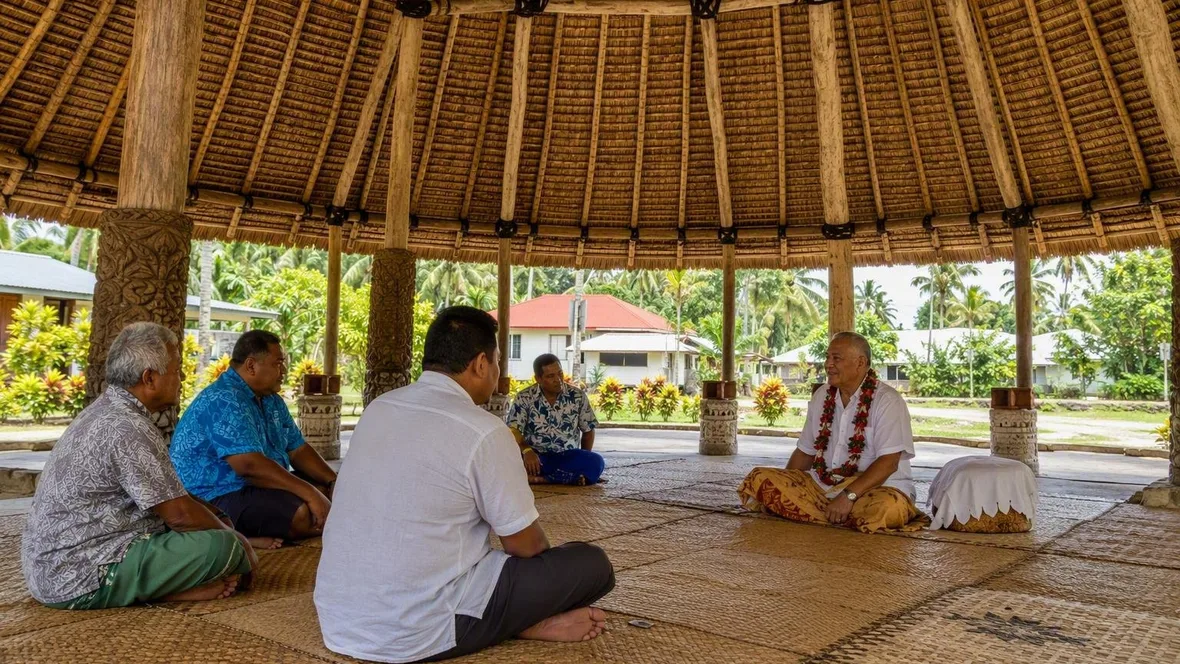
On family land in an Upolu village, the large fale tele traditionally stands near the front, facing the road or lagoon. Smaller family buildings and the cooking area sit behind it. The fale tele receives guests and holds shared decisions and major family occasions.
This is not a beach hut among houses. The Samoan word fale means house, and its open form can serve family meetings, ceremonies, sleep and shelter. Walls are absent, but rules are not.
Timber, stone and coconut cord
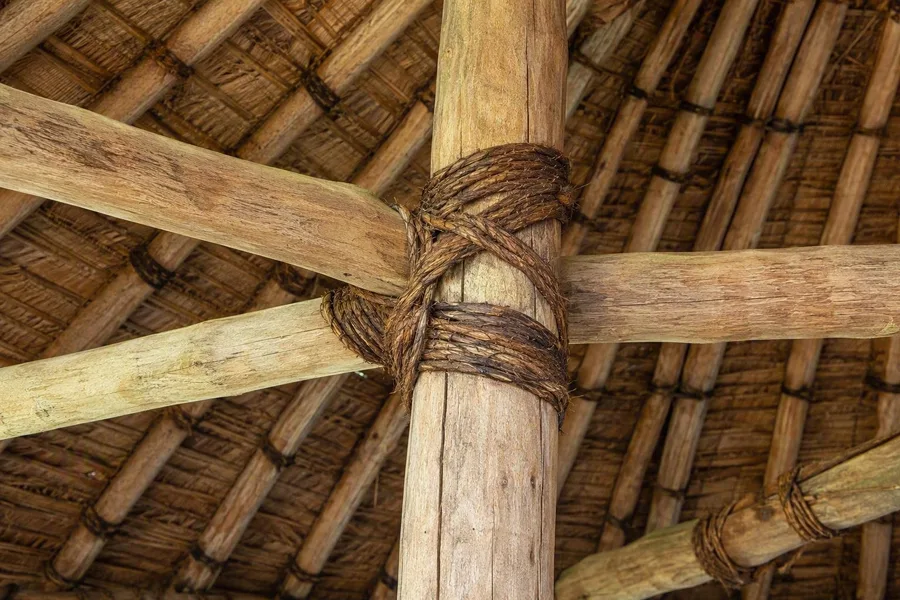 Builders lash coconut-fibre cord around the timber frame of a fale tele on Upolu.
A traditional fale tele starts on a raised stone platform. Smooth pebbles once formed the floor beneath loose woven mats, though many contemporary fales use concrete floors. Central posts, or poutu, support the high roof, while a ring of outer posts marks the oval or circular edge. Curved rafters and crosspieces span the space above.
Builders lash the wooden frame with ‘afa, cord braided from coconut fibre, rather than nails. The crossing bindings hold the structure together and trace patterned lines across the timbers. Traditional builders used breadfruit and coconut wood; present-day thatching commonly uses sago-palm leaves.
A tufuga fau fale, or master builder, directs the work. Family and village members prepare the ground, supply timber, braid cord and make the roof covering. Raising the central posts also has ceremonial importance.
The form suits Upolu’s warm, wet and cyclone-prone climate. The tall roof casts shade, open sides carry air through the space, and the steep curved cap gives hard winds little surface to grip. Coarsely woven coconut-leaf screens, known as pola, hang between the outer posts. During wind or rain, people lower the screens on the exposed side and raise them once the weather clears. Filtered light passes through the weave, while air continues through the open sides.
Where every post marks a place
The open plan may look informal to an outsider. Village life shows otherwise. The fale tele belongs to the extended family, or āiga, and its matai, the family’s titled head, receives visitors there and represents the family in the village council, the fono. Families also use the building for prayer, funerals and title ceremonies.
Fa‘a Samoa, the Samoan way of life, connects extended family, shared land, mutual obligations and village authority. Inside the fale, seating gives those relationships a physical order. Chiefs and elders hold recognised positions near particular posts, while other relatives sit or serve according to title, age and role. During a formal fono, matai sit with their backs to the posts and face the open centre; their places refer to ancestral ties and standing within the village.
Hospitality follows that order. At family meals, the matai, his wife and sisters sit toward the front, while brothers and their partners serve from the rear. During an ‘ava ceremony, attendants distribute the drink by rank. Privacy does not chiefly depend on doors. Family authority, custom and invitation determine who enters and where each person belongs.
Enclosed homes have not simply replaced the fale. A modern house may stand beside an open building used for family and village occasions, while corrugated-metal roofs and concrete floors have joined older forms. People still meet, mourn, pray and make collective decisions beneath the high roof.
A beach fale is a different kind of room
Along Upolu’s coast, smaller beach fales use posts, broad roofs and open sides for visitor accommodation. Their ancestor, the faleo‘o, served as an extra resting or guest space beside a family home. An open beach fale may contain a mattress, mosquito net and movable woven screens. Others have timber wall panels, windows, metal roofs or air conditioning.
The distinction matters. A beach fale provides booked accommodation, with choices about comfort and privacy. A village fale tele serves family life and ceremonies. At Taufua in Lalomanu, guests can choose open fales with rain protection or enclosed units with verandas and wooden wall panels. Similar rooflines do not give visitors access to a family meeting place.
Booking a beach fale
Accommodation listings use fale for anything from an open sleeping platform to an enclosed, air-conditioned room. Some stays include breakfast and dinner. At Vaiula Beach Fales in Tafatafa, guests use shared showers and toilets; facilities vary between operators.
Entering on the village’s terms
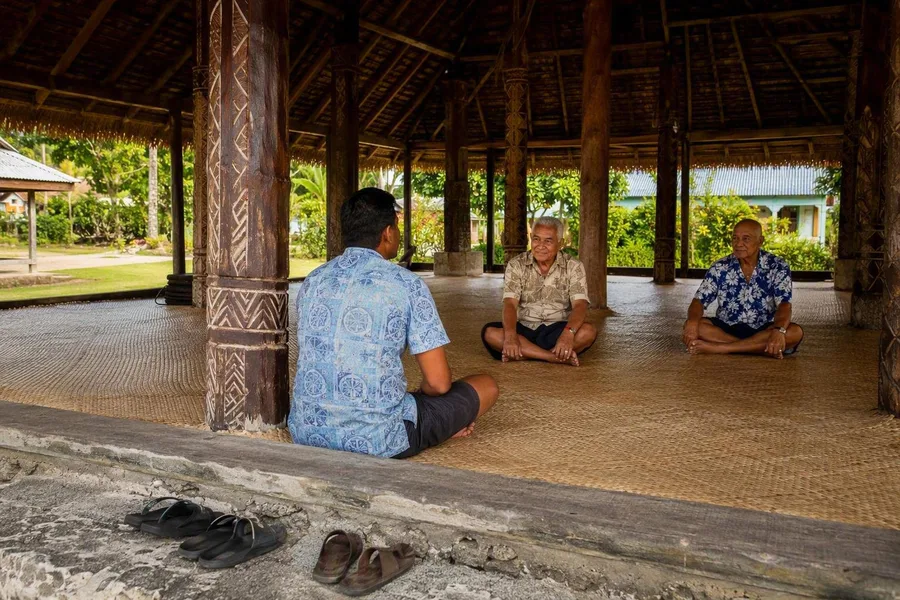 A visitor sits cross-legged in an Upolu village fale, with shoes outside.
Respect starts before the threshold. Wear covering clothes on village roads and keep swimwear for the beach or resort. Ask permission before photographing people or buildings, and before entering a beach, bay or lagoon on village land.
Inside a fale, shoes come off and the host decides where a guest sits. When elders are seated, sit rather than stand above them; crossed or tucked legs keep the soles of the feet from pointing at anyone. When passing in front of seated people, say tulou, meaning “excuse me”, and bend slightly.
Sunday centres on church, family and rest. Each evening, a bell or conch shell can also announce the Sa, the village prayer pause; do not walk or drive through the village until the closing signal.
At the threshold, shoes remain outside. A step carries the body from bright daylight onto the shaded mat, where air moves between the posts and curved timbers rise into the high roof on dark crossings of coconut cord.