Ten responsible places to watch for whales from shore
These ten coasts put people on paths, platforms, dunes and cliff tops while whales follow their own routes offshore. Pick the right season, stay on land and accept the essential uncertainty: even in peak months, the sea may hold no whale in view.
A cliff path above Walker Bay. A boardwalk over dunes at Warrnambool. A seawall beside an Oregon town.
Each place on this list keeps the observer on shore, with a defined viewpoint or path and a coastal reason that whales may pass, feed or raise calves nearby. None offers a guaranteed sighting.
1. El Doradillo, Argentina
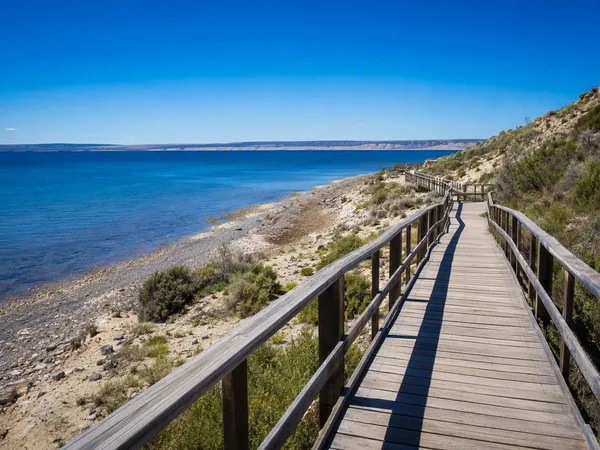
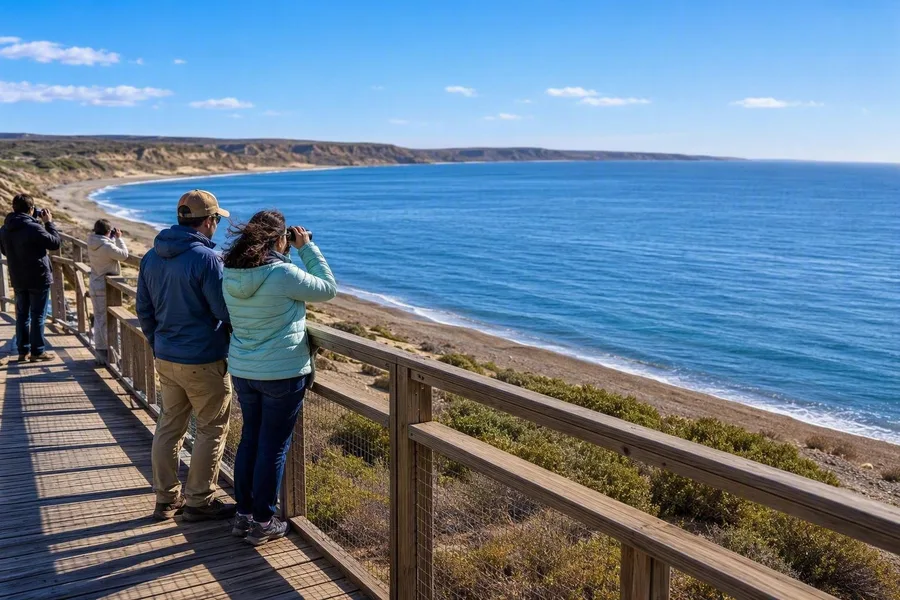 Visitors scan Golfo Nuevo from the accessible boardwalk at Punta Dorado.
Southern right whales use sheltered Golfo Nuevo to mate, calve and nurse. At El Doradillo, near Puerto Madryn, June to October is the main shore-viewing period, and high tide matters most.
Las Canteras beach and the accessible boardwalk at Punta Dorado provide fixed places to look from land. Wardens oversee this protected coast, and seasonal bans on swimming, other water activities, drones and dogs keep people out of the nursery waters. The beach remains a boundary, not a launch point.
2. Head of Bight, Australia
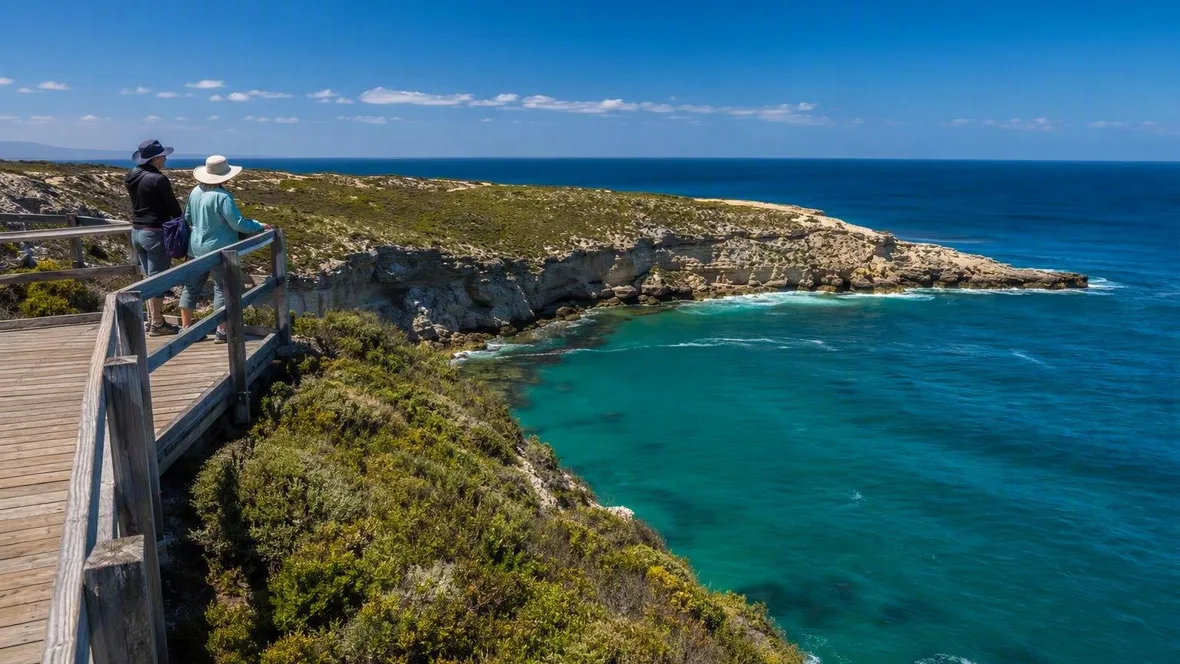
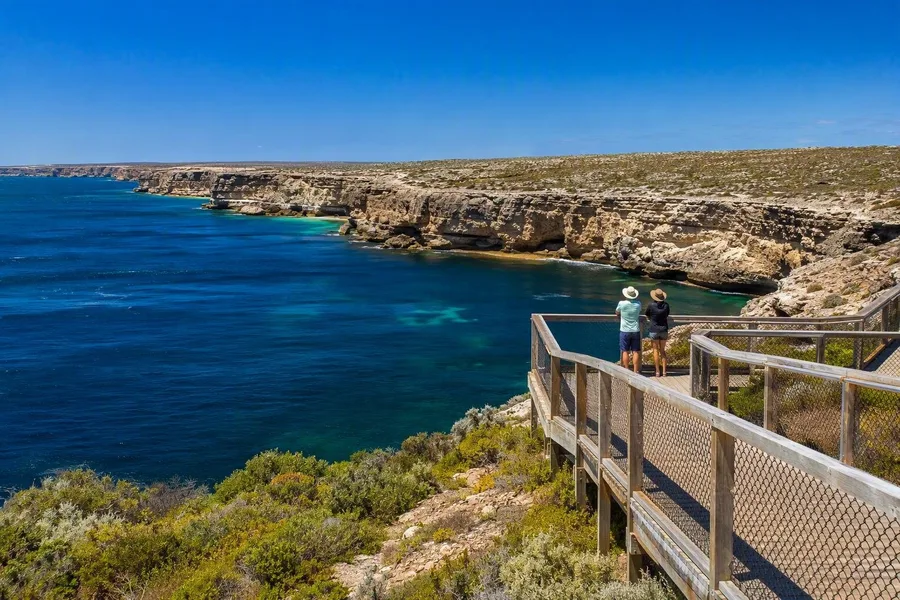 Visitors watch sheltered calving water from the clifftop boardwalk at Head of Bight.
At Head of Bight, Nullarbor dunes meet a long wall of limestone cliffs above sheltered calving water. Two boardwalks lead to east and west viewing areas on the clifftop, with ramp access for wheelchair users.
Southern right whales usually gather here from mid-May to late October. Humpbacks can pass in the same period, but less regularly. Visitors stay on the boardwalk above a seasonal exclusion zone, leaving the bay to mothers and calves.
3. Logans Beach, Warrnambool
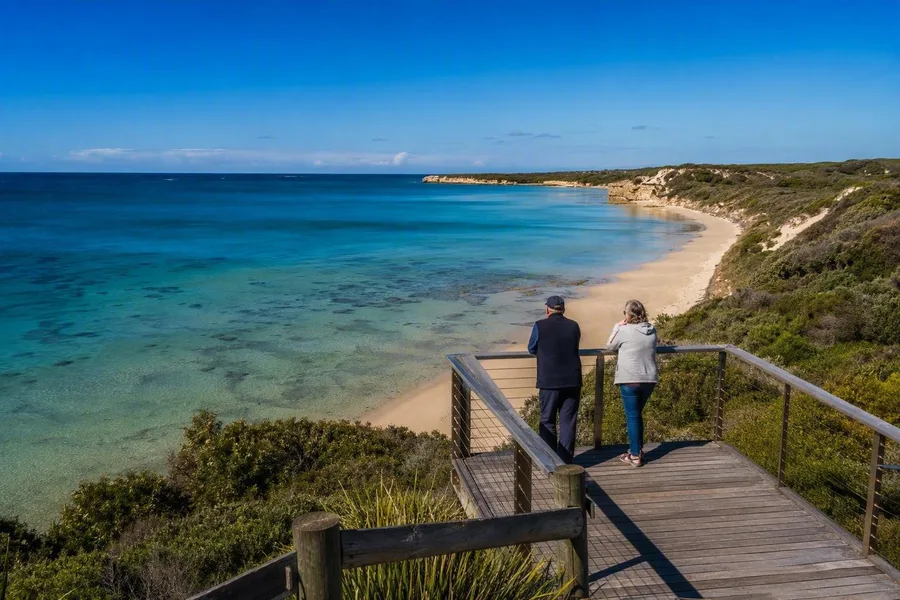 Observers scan the calm shallows from the viewing platform above Logans Beach, Warrnambool.
Female southern right whales generally use Warrnambool’s calm, shallow water from June to September for calving. Males and younger animals usually remain farther offshore.
A free platform with ramp access gathers observers in one place above the beach. The rule is simple: use the platform or beach, do not cross the dunes or trample their vegetation. Whales can be in the region and still remain beyond sight from this shore.
4. Cap-de-Bon-Désir, Québec
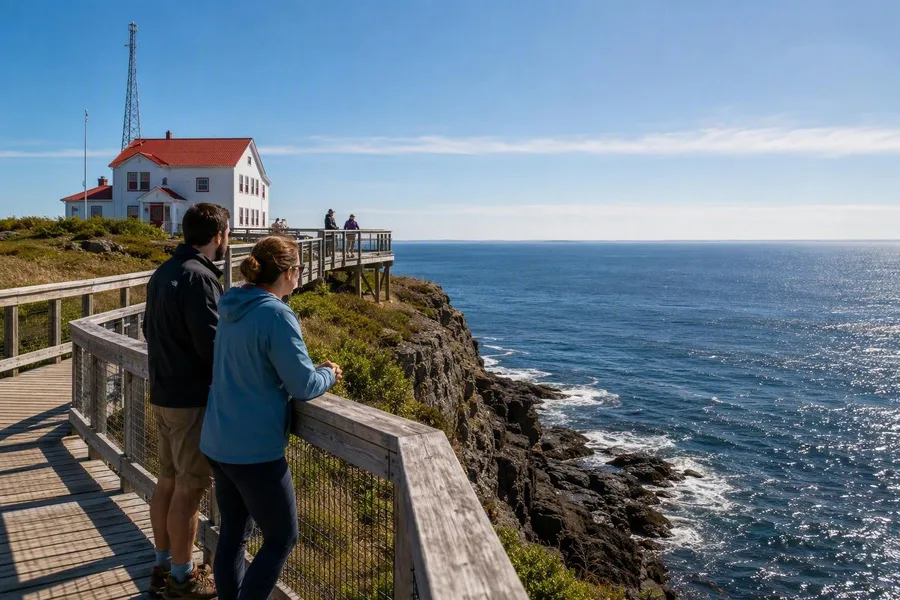 Visitors scan the Saint Lawrence from the Cap-de-Bon-Désir belvedere above the rocky shore.
Cap-de-Bon-Désir occupies a former lighthouse station on the Saguenay–Saint Lawrence Marine Park. Its belvedere and rocky shore provide a land-based outlook over water where belugas and fin whales may feed close to shore.
The Laurentian Channel drops almost 300 metres just offshore. That steep underwater edge brings food toward upper water layers, which helps explain why fin whales can forage near the rocks. Interpretation on site adds context without sending visitors onto the water.
5. Pointe-de-l’Islet, Tadoussac
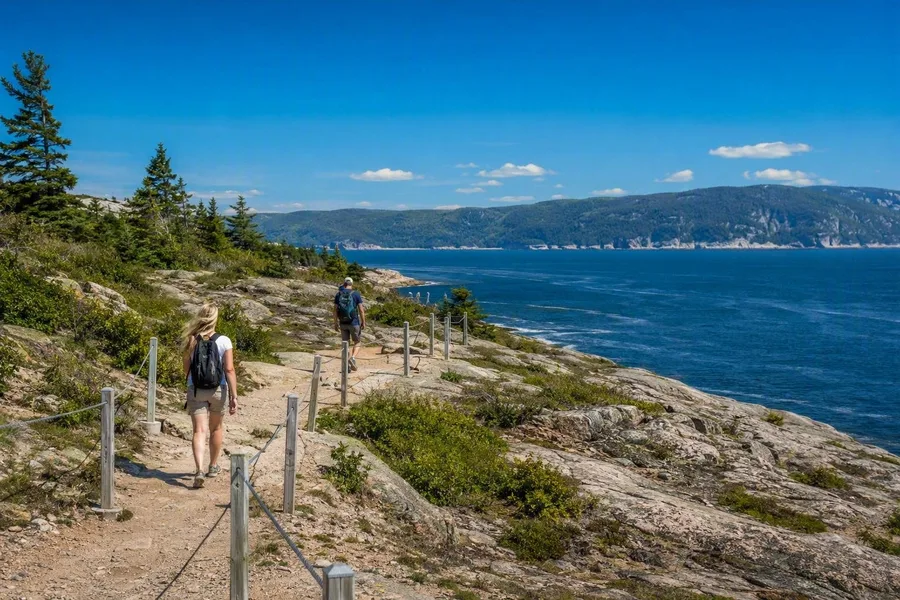 Visitors follow the rocky path at Pointe-de-l’Islet, looking toward the Saguenay and Saint Lawrence.
A short, easy loop follows the rocky point at the mouth of the Saguenay. Marked paths and information panels keep people on land while the view opens toward both the fjord and the Saint Lawrence.
Fresh water from the fjord meets salt estuary water here. Currents, cold-water upwelling and an uneven seabed concentrate marine life, supporting resident belugas and seasonal visitors such as minke whales. They remain possibilities, not appointments.
6. Hermanus Cliff Path, South Africa
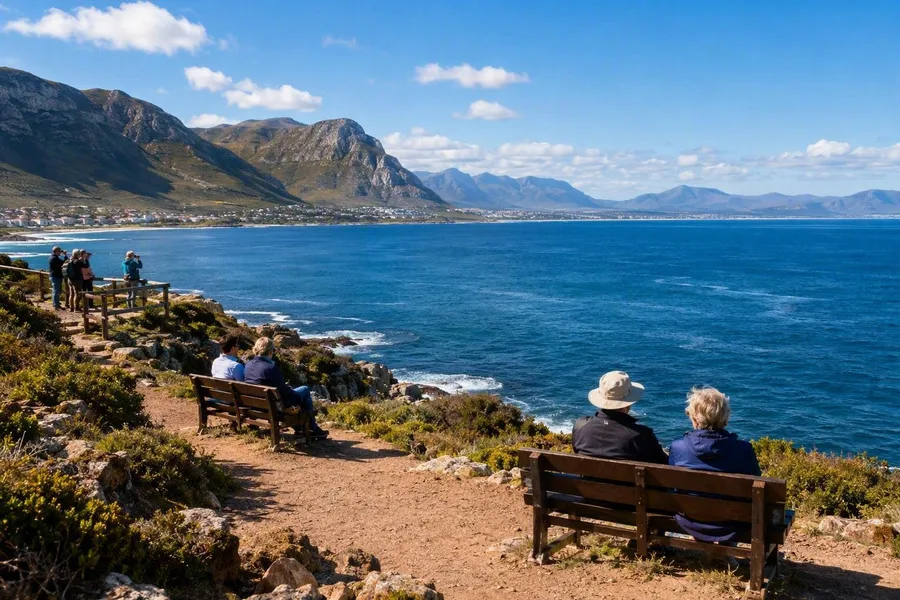 Observers scan Walker Bay from benches and lookouts along Hermanus Cliff Path.
The Hermanus Cliff Path follows Walker Bay from New Harbour toward the Klein River mouth, passing rocky coves, beaches and established viewpoints. Southern right whales enter the shallow bay to mate and calve from June through November, with the strongest period in September and October.
People watch from the path, benches and lookouts rather than from the bay. Hermanus’s whale crier uses a kelp horn to indicate reported animals along the coast, but the sound marks a report, not a promise.
7. De Hoop Nature Reserve, South Africa
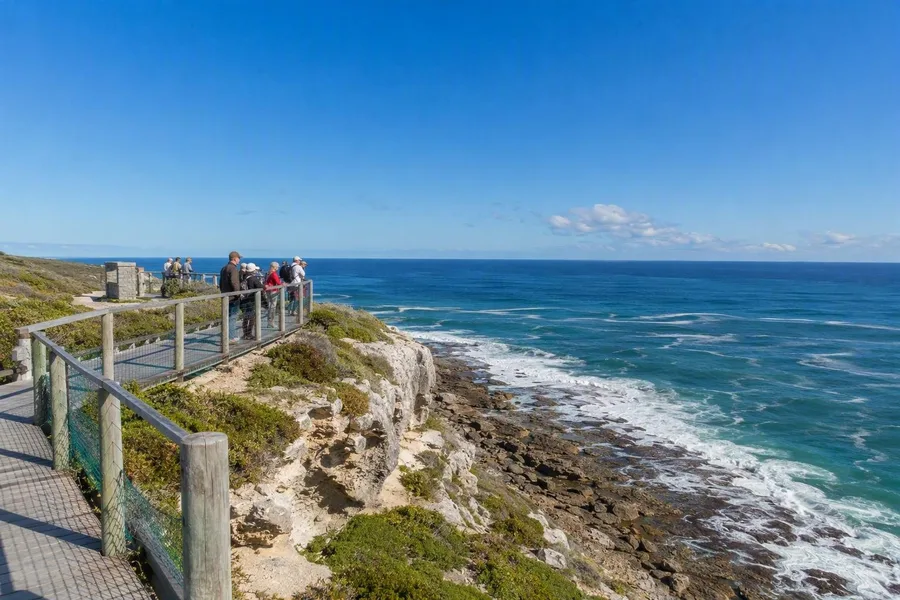 Visitors scan the protected coast from the whale lookout boardwalk at Koppie Alleen, De Hoop.
At Koppie Alleen, a whale lookout stands above De Hoop’s protected coast. A boardwalk reaches limestone cliffs, rocky shore and tidal pools, and the Coastal Trail starts nearby.
Southern right whales use these waters from July to November to mate and calve. Boardwalks and marked paths protect dune plants, while reserve rules also forbid removing stones or shells and disturbing wildlife. The marine protected area extends 5.5 kilometres offshore, but the viewing place remains firmly on land.
8. Point Reyes National Seashore, California
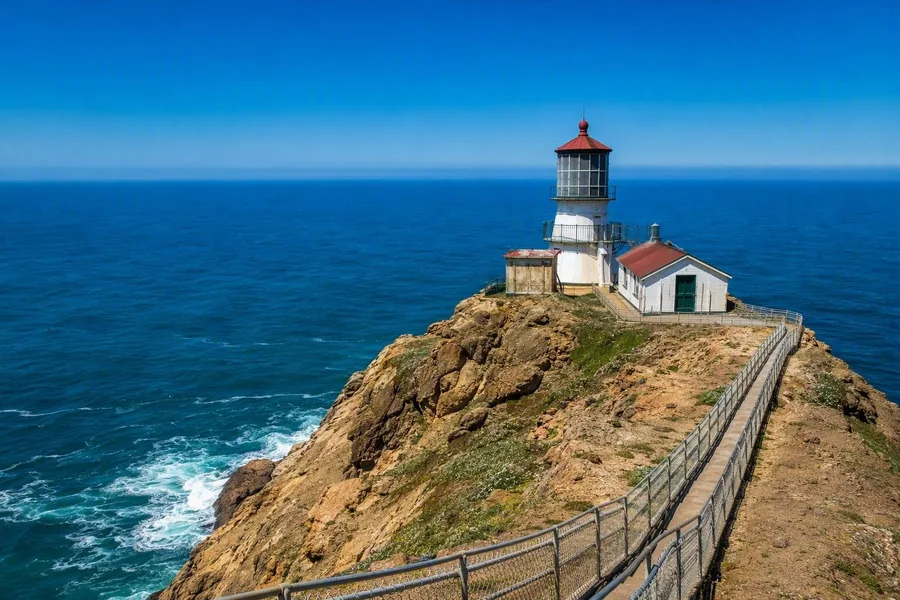 A designated path at Point Reyes Lighthouse overlooks the Pacific migration route.
Point Reyes reaches 16 kilometres into the Pacific, placing Lighthouse and Chimney Rock on a long, exposed headland with clear landward views of gray whale migration. Southbound whales pass from December into mid-February; the return movement runs from mid-February to May, with mothers and calves sometimes closer to shore in late April and early May.
The main viewpoints sit on designated paths, and pets are prohibited there. Wind, rain and summer fog can hide the water, while the whales may simply travel too far offshore to see.
9. Depoe Bay, Oregon
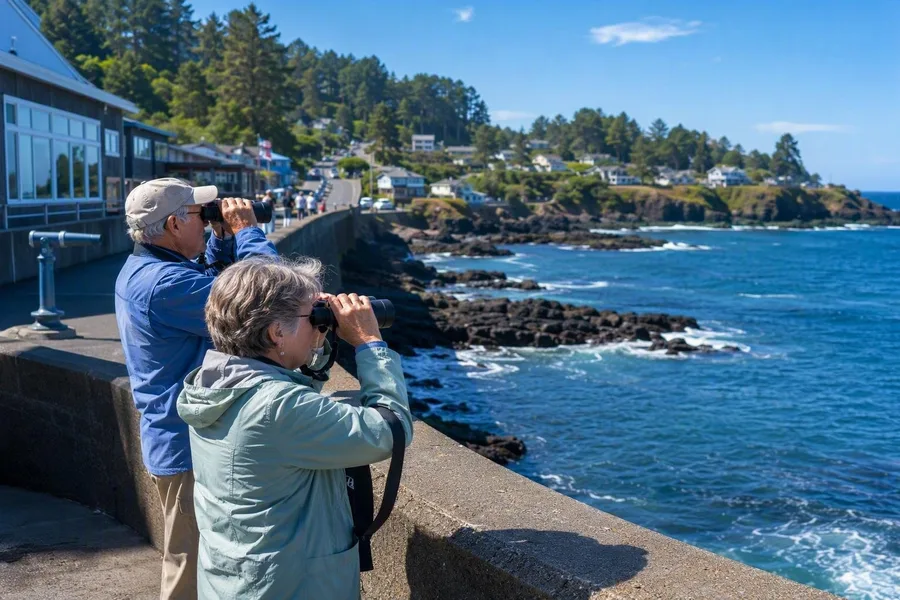 Observers scan Depoe Bay’s rocky basalt bay from the public seawall.
Depoe Bay brings shore watching into the middle of town. The Whale Watching Center and its deck stand on a public seawall above a compact, rocky bay cut from dark basalt.
Gray whales travel south in winter and north in spring. Some feed near Oregon’s central coast from June to mid-November, so the seawall can also be useful outside the main migrations. Staff, volunteers and binoculars help observers scan from land, though repair work can temporarily close the centre and its immediate viewing area.
10. Cape Lookout, Oregon
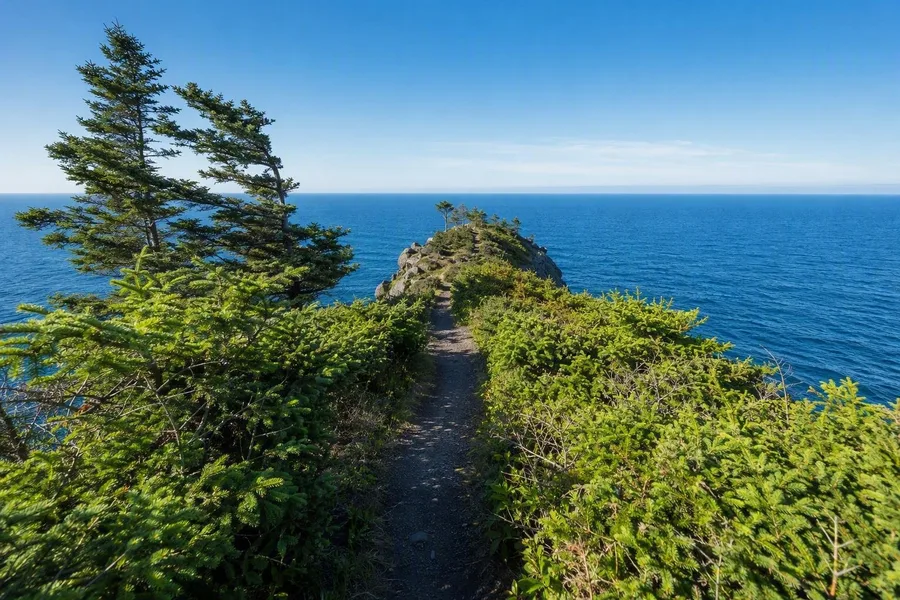 A trail through Sitka spruce reaches Cape Lookout’s basalt point above the Pacific.
Cape Lookout asks for a walk through Sitka spruce before the coast comes fully into view. The narrow basalt headland runs more than 2.4 kilometres into the Pacific and ends above cliffs about 120 metres high.
Gray whales pass south from mid-December through January and north from late March through June. On the northbound journey they may travel closer to shore, and mothers with calves can pass in May. The trail ends with open water on both sides of the basalt point, while the ocean lies beyond the cliff edge.
Practical timing
For southern right whales, use June to autumn at El Doradillo, Head of Bight, Logans Beach, Hermanus and De Hoop; Québec’s Saint Lawrence coast is most practical from late June into early autumn. Gray whale windows run through winter and spring at Point Reyes, Depoe Bay and Cape Lookout. Head of Bight, Cap-de-Bon-Désir and De Hoop charge admission; facilities and access at Depoe Bay and Cape Lookout can change during works. Binoculars and a windproof layer help, but mist, wind and swell can reduce the view.
Keep exploring